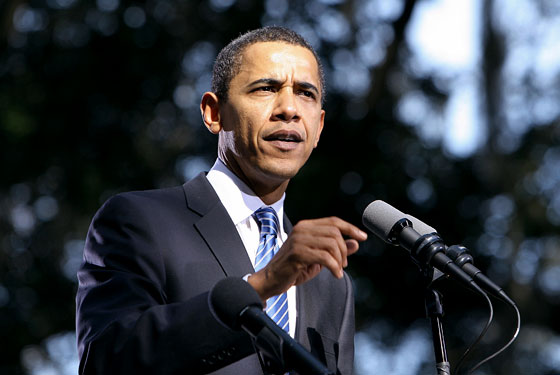
Latin America is on the rise, whether other regions of the world are willing to admit it or not. With America's massive debts to China and the EU's inability to foster proper economic or military reactions in the modern day only the Deep South remains a viable player in both the expansion of armed forces capabilities of the free world. So while Barack Obama's state visit to foster economic cooperation may have appeared to be a simple gesture of diplomacy between the dominant world power leader and the historically subjugated Latin Americans, it really shows a turning of tables as far as the rule of international leadership extends.
(Photo credit goes to MercoPress.com)
From the outset one fact must remain clear: America is no longer entirely superior to its southern neighbors. With the wreckage of the economy in recent years the U.S. has been left in a humbled position, and the precarious debt which it holds with China only seems to suggest that this trend will continue. At the same time countries like Brazil and Chile have begun picking up market power, gaining ground without the same critical debt levels of the north and reined in by no foreseeable force from abroad. Even though the communists once controlled much of the region recent developments such as the collapse of both right and left wing governments has led to a string of mixed economies that so far seem to be succeeding.
In the department of armed forces, Latin America is also advancing particularly firmly, and this is best seen once more in Brazil Recent stats put their military size at just over 370,000 active with another 1.3 million in reserve, the once quiet nation is very ready to seize up its own role in the world should it come to its doorstep. In comparison to the rest of the world, these numbers are entirely impressive given the country's rather dormant activity over the past decade, and other surrounding armies may give the area the collective strength its needs to achieve greater influence in the world.
Markets also give way to the potential of a massive upswing in Latin America's influence and viability on the international stage. For one, auto markets have surged by 10% in each of the past 3-years, and the movement of American firms to the southern nations gives the zone a likelihood to only grow more powerful as its affairs develop into a stronger pro-market position.
There is no doubt that the future is still to be decided, yet American influence seems to be ever-waning, and the recent administrations of George W. Bush--and more pointedly, Barack Obama, do nothing to dissuade this approaching ultimatum. The endurance of the U.S. remains uncertain, but by all means Latin America should no longer expect to be a minor force in the near future.
Michael Veramendi
National Alliance Vice President for Foreign Issues
(Hugh Martin is an associate columnist with the National Alliance Foundation. As with all opinion columns, his words do not forcibly represent foundation beliefs, yet we greatly appreciate his addition to the socio-political debate).
No, I my intention was not to ignite any sort of firestorm over this issue--but then again, it's unlikely one will be regardless of the title to this particular article. As an African-America, some might even wish to indict me in the courts of racial legacies for daring to put forth what I inevitably must over the following sections, but I'll truly be damned if it manages to impede my goals with this written piece.
Ever since I can remember America has been on a path to more empowerment; in fact one might just say we have reached a pinnacle of success, with the still recent election of Barack Obama as our chief executive a sure sign. Despite the downsides of the segregation and slavery histories of the past, the Land of the Free continues to live up to its unique title, blessing thousands of immigrants and native citizens each year with a tremendous opportunity at personal liberty and financial achievements. Besides African-Americans, Hispanics and other minorities are seizing scholarships, attending universities, and forging their own part of our wonderful marquee of freedom.
But the grace of success is not limited to male members of a minority group. Even now women outperform the opposite sex in education, job superiority, and as more become bold, American Politics. So we might tend to view everything in our modern day like a perfected fantasy--where liberty and multiculturalism reign victorious as the cataracts of ancient discriminations fall to present day intellectualism. Except for a tiny fact. Far as we have come as a nation, the casualties of our racial advancements can clearly be understood in the almost universal pillaging of the white male image in American society.
Like I refused to deny earlier, I am African-American, but as much as I welcome the empowerment of my race and others I am forced to pay tribute to the white male's rather alarming movement from equal status in America to the new social untouchables; denizens who are characterized as categorically racist and steadily have lost basic chances at success with the rise of balanced racial standing. Lower income whites hold the highest nationwide poverty levels, for example, yet the guise of progressivism has lobbied for minority-only scholarships and university slots which have begun to remove what were once standard routes for success available to average males citizens who, by virtue of their birth, are Caucasian.
(Photo courtesy of blog.cleveland.com)
Too often we are treated in the modern day to the stereotypical white corporate inhuman in popular media whose sole purpose is to line his own coffers or those of his Wall Street cronies by employing corruption and abusing minorities. When James Cameron's smash hit Avatar soared into theaters at the end of 2009, its stunning visuals gained instant appreciation, even to the extent as to cause its followers to attempt suicide in order to reincarnate as a peaceful Na'avi alien on Pandora, where everything appears to be in sync with nature through Cameron's dazzling styles. Notwithstanding the digital gold, Avatar's simple and straightaway political message manages to weave its two bastardized villains as the commonly-imagined white corporate bad boy and crew cut Caucasian Army Officer who leads a band of redneck-like soldiers in their pursuit of "unobtanium," a rare fuel type required for production by the military industrial complex. The heroes of course remain a white and a Hispanic woman, and the aliens, who look like a cross between Native Americans, African-Americans, and cats.
Although James Cameron's fantasy is in the media world, the reality of white male treatment in the media is hardly any better. Senator John McCain was maligned by the new outlets as being a hard-line "old rich white man," in their portrayals during 2008, and even President George W. Bush's generous provisions of AIDs cure research funds to Africa and military defenses to Colombia were lost to their fixed mindsets. Never mind President Obama's scaling back of both these programs, as he seems immune to their drivel given his racial status.
The reality of the modern day remains bleak if one considers that regardless of attitudes, white males still make up a majority of the population. While it can be said definitively that mistakes were made by their forefathers, criminalizing them in the modern day for transgressions long since passed is not only unfair, but also destructive to American hopes for full equality. Creating a disadvantageous situation for a major group in society will not help our nation in the long run, even if the racial extremists feel retribution is due. Though slavery and racism did occur in our country in the past, many Caucasians of today are descended from families who came after the end of slavery, or from countries which simply rejected it entirely. At the same time, dictators in Africa today have turned things around, targeting white farmers with racist policies to force them into exile.
We cannot hope to be perfect, yet playing races off one another for the sake of some poisonous multiculturalist fantasy is lopsided towards mental unreadiness. As Americans we should remain united as an image of racial moderation, representing a nation where anyone can succeed, and no person's birth status denies them that treasured hope.
Recent reports have included notes of a deadly "sniper virus" known as the Stuxnet has already began tampering with Iranian system controls, affecting what is estimated to be at more than sixty thousand computer units in the Tehran. Alongside this, several nuclear scientists have slowly been disappearing, with many blaming Mossad and the Israelis for both occurrences. Intentions aside, there are few reasons to doubt the validity of this claim--nor to condemn its reality. Iran's internal struggle with theocracy may just be coming to an end, leaving the world with a far better future.
Considering the number of strongly pro-western students who reside within the country's borders, it is unsurprising that non-militant activities to cripple the government of Iran are resulting in far more effective methods of deterring the radical power than a directed military assault against its position on the globe. In this manner freedom may very well take hold of the political reins even as not a single shot--or at least few, are fired.
Among the Iranian youth, the desire for freedom is evident even to the least insightful. After a dramatic Green Path of Hope movement in the capital city, hundreds of thousands in the nation joined hands to stand against the oppression of their president and decried his zealous desire to gain hold of nuclear power. Furthermore, the population levels are truly stunning, with over 70% of the population under the age of twenty-five, a clear warning of how beneficial wisdom-driven western influence could become if guided properly.
American foreign attitudes have perhaps too often devolved into a broad view of the Middle East in which all Muslims in the region are grouped into a large pro-terroristic mob with little sense or appreciation of civility. While this is only true in pockets of the general area, it is almost entirely inaccurate when applied to the realities of the state of Iran. Being predominantly Persian, the people have a very different view than their heavily Arabic neighbors; westernized attitudes melded with Islam to forge a more peaceful assessment of what should be done to curb violence in the global district.
Therein lies the terrible reality for the Ayatollah and his presidential stooge. Without an ability to further their radicalized concepts unto the rebellious youth of the country, the co-viceroys will be no match for the internal revolution just waiting to spring forth. Just as the brutal and iron-fisted Shah was no match for the organized clerics, the Ayatollah's waning grasp over the people will collapse as young Persians overthrow and reject his principles.
The battle is not yet won, but maintaining a solid foreign policy which seeks to systematically dismantle the nation without excessive force will allow the international world to watch as Iran's government disassembles itself and is replaced by true democracy.
Ayla Samadi
National Alliance Vice President for Domestic Affairs
From a respectful standpoint, one must be willing to congratulate the Democratic Party. After all, despite only four years of congressional power, they have managed to radically implement some of the most extreme ends of their ideological base, only crowned today by the stunning repeal of Don't Ask Don'r Tell, the military's secretive policy towards gay service members within its ranks. Considering the GOP could not accomplish something dramatic like this back when it held such power, bring your hands together for the political ploys and strategies of the center-left! Without their presence, we might truly have governmental stagflation; a limbo in which nothing changes, and yet nothing is accomplished. Merits here are for the party, whether one agrees to their views or not.
Of course, not all change is christened with righteous prosperity however, and this legislative paper is poignant because it represents the collapse of Old America and the values which it stood for, as well as signifying the slope which we are steadily descending into the unmaking of everything which is our country.
With gays having won their initial battle, the test moves as to whether or not gay marriage, which has shamelessly and untruthfully been propped up as the permission of love between two people, will receive nationwide legalization. Considering the "take no prisoners" attitude of Senators Durbin and Schumer, the legalization will likely come within the next eight years, when the Democrats will likely control enough power to override a presidential veto, and thus make the bill law.
Sadly, the individuals making such decisions are not experienced Americans from average walks of life, but wealthy and egotistical Ivy League graduates who will send their children forever to private schools and never risk the mainstream negatives of their own folly in the nation's capitol. Senators like Russ Feingold, Al Franken, Carl Levin, and Chuck Schumer have all voted in a way that defies the very core tenets of their faith, repealing the military policy despite having no soldiering experience to glean reason from, nor sensible reason to cast their ballots in this manner.
This era of elected officials is the continuation of a dangerous path which shall only end with the undoing of this country's legacy of government and its people. If further liberal congresses take power, they will likely grant amnesty to illegal aliens, solidifying a voting bloc which has been tricked into party support through a capitally dishonest smear campaign against pro-reformers perpetrated by the Democratic Party.
As the successive sessions remove social issues from the political mix, effectively shooting down attempts by the GOP to repeal or reinstate old policies, American society will lose he necessary moral guidances, the absences of which have destroyed the societies of Britain and Germany over the past fifty years. American in the next six decades may very well be like Europe; where political parties differ on solely on economic--not social issues.
All empires must one day fall, yet America was meant for a far greater and longer-term status as a universal decider. Now, with Russia training its own youth in the Church and in respect for the military, the former Soviet nation may very well become the new leader of the world--though perhaps not in the same manner which American leaders have for so long acted. We as a country have grown too spoiled--too undeserving of what we we born with, and that will lead to the collapse of our great union in the near future.
Since its formation, the National Alliance Foundation has firmly held the view that Israel is a force of good within the Middle East which must be be both assisted and protected by America and its allies in order to preserve the greater security for the entire world, as well as the allowance of religious freedom in the zone. Thus it is in perfect character for us to step out and clearly differentiate between the arguments which Palestinian sympathizers and the pan-Arabian nations have tried to spin about the importance of the city of Jerusalem, and the truth.
For longer than most would care to consider, the State of Israel has been targeted by the Arabian states for absolute and total elimination from the face of the planet, despite of its relatively small size. Repeated attempts by the Egypt-Jordan-Syria alliance were met with considerable failure throughout much of the past 50 years, yet the bloc shows no desire of letting up its hopes. One might find it hard to explain, seeing as the country is a mere strip of life bordering the Mediterranean; not a massive threat to each of their security.
It's further intriguing that nowhere in the Qu'ran or other Islamic texts is Jerusalem mentioned as holding particular value as part of religious principles or doctrine. When Mohammed began his religious expansion years ago, he designated Mecca, Saudi Arabia as the religion's most important city, only turning his sights to Jerusalem once it was realized that the city harbored a large non-Muslim population that might be persuaded to convert and strengthen the fledgling faith.
Truthfully, it is not hard to see why Mohammed took this path. Despite the rest of the region's committal to idols beforehand, he managed to popularize and forcefully spread Islamicism across the breadth of the Middle East, Southern Russia, Southeast Asia, and most of Northern Africa. Yet in all this accomplishment, Jerusalem held out as the Jewish haven and citadel, making it a thorn to his plans for universal Muslim dominance in the world. Essentially, the Islamic argument is based on a desire to spread the religion, reject aggression or violence.
On another note, Jerusalem represents the last holdout of democracy in an almost entirely authoritarian Middle East. Try as they might to argue for freedom and a more united region, the pan-Arabian states largely ignore the fact that they are run by monarchs or puppet prime ministers, while Israel healthily exchanges power between both the right and left of their country, spiritual and moderate. In Israel's borders, average people are allowed to attend Islamic mosques or Jewish synagogues without persecution; the case is not the same for its neighbors, countries where other faiths are persecuted if they try to rebuild structures or expand into the government for influence.
Today's world is not a safe place for assumption; rather, the debate must be clear and without marring splotches about its coat. Israel is a necessary presence in the Middle East in order to preserve democratic ideals and religious freedom--Jerusalem being its heart and soul. Only consistent dedication and upholding of its security can help the world become a more united and free-expressing domain.
Ayla Samadi
National Alliance Vice President for Domestic Affairs
(Please note: this piece is part of a two section opinion series on America's solution to illegal immigration. Neither article forcibly represents the views of the National Alliance Foundation)
In the age of the Tea Party and the conservative revolution which it embodies, it's sometimes easy for us to be swept up in the moment, forgetting the hard facts and truths about where we as a nation have come from, and were we may go if we do so in a united fashion. To be clear, I'm not a Republican by a long shot; I dislike the policies that too often fringe on pro-corporatism and outsourcing of American jobs, which can be tied directly to the immigration issue, as will soon be covered. Instead, my registration is Democratic, and I favor a more realistic approach to immigration, and indeed one which I think even my red state friends can come to agree with me about.
Spend even a few hours with a family of South or Central American descent, and almost universally they display and incredibly noticeable pro-familial attitude towards life, which, strange as it may be, is very conservative! Many Latinos own the small businesses of our nation, harvest the produce for our organic markets, and provide wonderful environments for growth even for other Americans under lesser circumstances. Even in the poorest of conditions, Hispanic families cherish a warm and united feeling between their members, inspiring those around them and in the case of the small business owners, creating jobs.
This is why I cannot abide to the GOP's near insistence on not only alienating, but going so far as to demonize the immigrant community for being as they will. Of course assimilation is necessary, but does anyone really want to chase away the pro-family attitude of the majority of these immigrants? Considering the mounting divorce rates spreading across the land like a plague, how is it hurtful to to bring in a culture which predominantly is advocating monogamy in marriages and a close knit, conservative way of life?
Whenever he border security issue comes up, my good Republican friends are always ready to pounce, delivering a blistering tirade against the problem of the open border, and thus sidelining the countless Hispanic immigrants who have made the lives of others better in this country through their courageous openings of businesses and shops. And regardless of the hard right conservative mementos of the Spanish language as some festering virus, most second generation immigrants speak near flawless English while their parents may pass on still communicating in their motherland tongue. If this seems untrue, then I urge my conservative detractors to listen to a speech by their newly enthroned bastion of Reaganism, Senator-elect Marco Rubio of Florida, whose parents were Cuban immigrants, yet he today speaks flawless English.
Solving our issues with the border is by no means about trying to marginalize and cut off one source of new American citizens in the form of the Hispanic community. Looser legal immigration restrictions, more protectionist job opportunities, and further investments in math and sciences are what will help us build a more united future as a true melting pot culture. This image does not need to be scapegoated habitually by the GOP, nor by the more traditionalist Democrats. As Americans we are not exclusive to one race or one party, but instead to a legacy of pride and honor as the last hope for freedom and enterprise in the world.
It's really self depreciating to listen to Barack Obama--or even his deputy of questionable intellectual prowess, Joe Biden, railing on endlessly about America's commitment to ending human rights violations around the world. In spite of Biden's forward attitude, which went as far as to naively endorse the use of American soldiers to end the crisis in Darfur during the 2007 Youtube/CNN debates for Democratic candidates, neither elected official has actually moved towards deploying soldiers, whether they be from the home soil or out of the barracks of the United Nations.
But Darfur is only a small fraction of the larger scaled problem. Genocide exists, all but ignored by the international community in Zimbabwe, Rwanda, Botswana, and South Africa. Heads of state in these nations, once applauded as the harbingers of democracy, have now crossed over to the very depravity which they formerly decried, committing unspeakable acts while still diplomatically cordial with the modern world. Spitting in the face of the United Nations and the international forces which supply their nations with relieving monetary aid, leaders like Robert Mugabe, Paul Kagame, and Sharif Amhed are all presently allowing criminal acts to occur under their tenures.
It might be viable for the Administration to argue against involvement based on funds available, but it still fails to explain why none of its pro-UN rhetoric has actually foreshadowed firm military action against any of these nations. Nothing can be made of the point that these miniature powers would be difficult to overrun; in fact, their militia groups could be made short work of by advanced foreign troops. Most analysts--including the generally less astute Joe Biden have noted that a small brigade of special forces would be enough, at least in the case of Darfur, to incapacitate Omar Sharif and neutralize his radicalized government institutions.
We as a nation can try to propel ourselves into a depth of reason and philosophy to oppose any course of action which is not strictly based on national interest, but the question still must be raised; how are any of these countries not in our best future outcome for foreign conflict and trade? Any of these entities, charged by a force of capitalist government and renewed through democratic process could easily become meaningful trading partners with the United States, and possibly, valuable allies in the War on Terror.
The issue at stake in recent years has been the government's refusal to create new allies in more secure areas of the world. Africa in particular is not a dramatic ally today, but its strengthening by the Western World could monumentally restructure the focus of international disputes which are ongoing today in a positive manner. If one looks at the populations of many of these nations, documented within the CIA's World Factbook, they rise considerably and offer large forces of able bodied men in the present time, giving an entirely feasible channel of soldiers to bolster coalition forces around the world today. Were only a few sections of these bodies of force to stand alongside the United States and fully fledged allies, the wars in Afghanistan and other potential conflicts would be less costly to solely the manpower of America and Great Britain.
Combating extremism about the globe should not be as narrow sighted as to require the use of the only the largest nations and their military forces. With a supplemental help from smaller countries, which would benefit by receiving economic ascensions through their participations, the burden of any conflicts would rest not only on the United States, but more evenly on the remainder of the free world, a goal which we must all strive for.
Michael Veramendi
National Alliance Vice President for Foreign Issues
As each day passes, Mahmoud Ahmadinejad's radical expressions are becoming a massive trove of critical danger to the international community. Despite his obvious desire not only to eradicate Israel but furthermore to install a universal Islamic republic across the Middle East, the leaders of many superpowers and democracies appear to be taking a one handed approach to pacifying the president, rather than forcefully taking action against him.
True, the use of force goes hand in hand with distrust and violent actions, yet those are not excuses to use in withholding due action against the extremist executive. Our failures with Iran go back to the days of Jimmy Carter, when the Democrat's government failed to prevent an upheaval in the country which helped create the rise of the Ayatollahs and their twisted rhetoric for jihadist dominance over the republic. Before Carter's hesitance, America had enjoyed strong diplomatic ties with the Shah, Iran's pro-western monarch who decried Muslim extremism.
Under the new spiritual leader rule of the Ayatollahs and now the joint leadership of President Ahmadinejad, Iran's government has turned into a bastion for regulation of free speech and enterprise. No longer is their desire to only speak out--they have embraced a position in the world, together with their grasp of nuclear weapons, that threatens Middle East stability like few other power blocs have accomplished before.
In keeping with basic sensibilities, I am hesitant to endorse military action against the Muslim state, yet we must begin to accept that Iran is not a small player in the race for spiritual authority in the world anymore. With the backing of a more industrialized nation such as Turkey, it could easily transform into a more formidable--and unwavering, force. All Iran which Iran truly requires however is an opportunity to strike, something which countless examples of gerrymandering by world leaders in the present day are creating.
President Obama must cease his coy strategy with the Iranian government and instead breach the walls of extremist dialog to make way for a more moderate state. Doing so would be as simple as offering support and sympathy to the Green Path of Hope, a movement which has managed to shift the fundamentals of political power in Iran and force at least some action from its leaders.
This issue cannot be treated as an off the table topic for the Whitehouse. Freedom is at stake because of fear which is rooted deeply in the hearts of political leaders. But its foundations are wholly unjustified, as a decisive move would be more than accepted by even the United Nations, which has noted the threat posed by the conservative president in Iran today. It need not be a bloodbath, but it must be an agenda item; else we shall reap the consequences of inaction.
Ayla Samadi
National Alliance Vice President for Domestic Affairs
(This article was written by a National Alliance Foundation author on an independent blog, and does not necessarily represent the views of the organization).
So I have made the decision to remove myself from the thin-skinned group of pundits and go for the throat; supporters of Ron Paul be upset or not. I no longer hold any sympathy for the views of the good doctor, no matter how popularized they might have become over the past three years.
I admit, despite holding a more moderate stance than many of my colleagues, I felt at least a strong initial attraction to the Texas congressman's radical policy proposals. And honestly, so did a lot of people. What could be better than a tough as nails constitutionalist who is sharp on the budget but equally wise on social issues? Like a decent share of the public, I felt he was genuine...until I began to realize what his entire movement was built upon.
As much as he enjoys playing the above the fray card whenever political discourse gets into the heat of issues, Paul still has yet to establish himself as a truly independent--and viable, movement. Even during the 2008 campaign, while still floundering for life as the two major parties shifted into a domineering mode over the election, the congressman would not isolate himself from both parties, instead ensuring that he noted the similarities between himself and then Senator Barack Obama on the issue of Marijuana legalization. While I am quick to endorse more social democracy in our country, the drug problem is not an avenue to take, no matter the libertarian argument in favor of action. The move really came off as a cheap shot to draw in supporters, not something which Dr. Paul truly subscribes to. Perhaps the federal branch should simply apply more freedom, but not in such a way that endangers citizens through self-destructive behavior.
But regardless of his political opinions, I cannot make myself believe that the Campaign for Liberty's poster legislator has the temerity and calm to ever be elected--or serve effectively, as a United States President. Though he may possess a coalesced brigade of support in his safe conservative district, nothing about him inspires national or foreign leadership as a president. Paul believes America should remain isolationist, even while the country holds so many unavoidable international ties with companies and other nations.
Years ago, Ron Paul's foreign policy might have been prudent, but these days it simply comes off as surrealistic. Even more liberal democrats know that withdrawing from the world goes hand in hand with regret later on. Had the 1990s been lead by a more confident interventionist president, the Iraq War might have been prevented. Instead, isolationist and strictly economic policy wrecked such a follow up's chances of success.
He may hold the attentions of the more obstinate undecided voters now, but as 2012 roles around the corner, Americans would be wise to choose a leader who is committed to principles, not the popularity of a grassroots movement. Dr. Paul may offer advice on governmental issues, but his presence on the national scene is more destructive to reality than beneficial to the nation.
It appears almost entirely obvious that the Obama Administration is going to urge Democrats in the House of Representatives to extend only the middle class portions of the Bush Tax Cuts, allowing those for higher earning Americans to die away in January 2011. While the National Alliance Foundation respects the desire for each president to impose their ideological beliefs on the nation, this does not justify the insensitive and reckless decision to change the tax code in th heart of a national recession.
Whether one agrees that the current system is fair or grossly not so, it is irresponsible to radically shift the structure on which our market economy is presently based. On the first tier, the move is hypocritical seeing how the president has campaigned against the tax cuts "only for the richest 2% of America." In fact, the Bush system did cut taxes on the poor and middle class, albeit not as voluminously owing to the lesser incomes of these individuals. Since then, the economy has grown considerably, only halted by poor regulations for financial institutions and of the course the two Middle eastern wars.
Perhaps more crucial however is the support which those cuts give to our economic state as a nation. Hold anti-corporate views or not, but our present globalist structure of trade is fused with powerful companies, not simply government institutions or the middle class. Cutting that line of support to the companies which supply most American jobs will not move the economy away from its recession, but simply bring it to a damage laden standstill. If one considers the tax cuts which will expire, for individuals who have income of more than $250,000 per year, they clearly do not account for most small business owners. Even a small cafe, independently owned, will bring in close to $300,000 each year, losing out on the tax benefits.
At its core, our economy is remaining structured because of the very tax cuts made in the early 2000s. Severing them as a means of growth will not help stem a movement towards exiting our receding markets; instead exacerbating the issue.
Ideology may drive politicians as they campaign for power, but responsibility must come before all else once they have ascended to it. Modifying the tax cuts is a decision which will invariably affect the lives of countless American college graduates and business owners tremendously, so it must be done in a calculated and wise manner. Maintaining the present cuts is the only way to accomplish this, and the most effective manner in which to protect our nation's economy.
John Lai
National Alliance Treasurer and Comptroller General
Not an election cycle goes by without voters hearing the vehement rantings concerning changes to America's debt-laden system of retirement security from both challengers and incumbents in the democratic process. There are cries of instability, injustice, and the unfairness to seniors which both the plan's current state and its recommended improvements seem inevitably bundled with. Despite the flashy and divisive media points which these meandering arguments can stir up, they almost universally miss the centrist and pro-American mission of reforming and revamping the fundamentals of the Social Security System.
Contrary to the popular talking point of the center-leftists, stabilizing the retirement system is actually an incredibly secure and generally risk free process that can be accomplished through a one time dedication to cooperation within both houses of Congress.
In order to effectively reform Social Security, the National Alliance Party proposes a three factor process. First, Congress must act to create an umbrella organization for all current Social Security participants over the age of 50. This net will transfer all the retiree funds to a secondary agency for a 40-year mandate of continued service after these Americans choose to cease working. As the years pass and these citizens retire, they will not be affected by an immediate burden of funding their own retirement if their careers were not adequately successful enough. By insisting on securing the future of seniors in our country, the government can avoid unnecessary political bloodshed from the older crowd in forthcoming elections.
Next on the government's plate would be legislation to establish a safety net for the lower half of the impoverished American population. Using basic logic, the poorer and likely the less educated people of this nation should not be trusted with their own retirement funds, as a simple investment mistake could devastate them. In this manner, even the most vulnerable financially would be able to avoid the potential trap of poor decisions with what they have been entrusted with in life.
It might seem so far as if this system would not change the sagging weights of the current retirement agency, but its crowning piece is yet to come. Under this more ideal proposal, the government would transfer retirement accounts for the middle class to solidly based 401k investment securities. Instead of handing money to the potentially reckless, Congress could secure people's funds within nearly impenetrable savings accounts while removing the insane burden which is Social Security from the shoulders of future American taxpayers.
Realistically, America has few other choices when dealing with this issue. As a nation with innumerable foreign and national security interests, we can hardly afford to cut the defense budget out of convenience to bring in more supportive revenue. A mass tax levy might work, but Americans would hardly stand for it at the polling booths, and we do not have enough graduates starting their own companies which may be targeted for more public funds.
In the 21st Century, it is the duty of every elected official and the people whom they represent to make sacrifices for the good of the future. Social Security might have sounded fine in promotion, but in practice it has become a terrible burden which threatens to cripple out economy in the relatively near future. But despite its menace, a series of tough and unrelenting steps can dramatically turn the tide for the good of the people. This is not about politics; it must be about responsibility.
Ayla Samadi
National Alliance Vice President for Domestic Affairs
English novelist Henry Fielding once brazenly stated that "public schools are the nurseries of all vice and immorality." I caution from adding this as a universal and unchangeable label to the American education system, yet the need for a better institution of mainstream education is overtly prevalent in our nation is obvious and takes little preparation or skill to spot sight of.
Shortly after taking office in 2001, President George W. Bush signed into law the No Child Left Behind Act in an effort to combat the statistically low test scores of students over the past decade. And while the plan was a general success, it did so at the expense of some schools with lower averages, cutting off funding to classrooms in which students simply did not make the accepted minimum. In spite of its movements towards stronger grade schools and enforced preparation for colleges, both positives to the mainstream, the bill was unfair overall because it did not address the central issue of the culture of poor instruction and academic behavior.
To be absolutely fair however, the other major party of the United States, led currently by President Barack Obama, has also failed to steer schools away from poor habits and academia, instead exacerbating the issue by voting to continuously increase the benefits of teacher's unions and instructors, all while these figures bring about the unacceptable results within our public schools. Yet one might ask, if salary spikes or the cutting of funding is not working, than what possibly can?
The answer is plain in its stating yet complex in detail: a radical reconstruction of the places of learning for most of the younger American population. Such an shaped system would be based on classical education, dispelling demolition of the historical figures who give children hope, and an imprinting of America as a nation of greatness--not failure, in the minds of the next generation.
In keeping with a commitment to discipline and self-resolution, students would recite not only the Pledge of Allegiance, but an oath in concrete embrace of education and with a tenet of dedication to success and accomplishment. Furthermore, students would wear uniforms to learn self respect, and administrators would be given authority no only to teach, but to instruct leadership qualities in each of their pupils.
In the vein of compensation, school teachers must stop being fed massive benefits through the federal system if their standards are not at least above average. As we live in the day of public sector unions, it is all too easy for bosses of these greed-based organizations to extort humongous concessions from the weak backbone of the national government even while they bring about terrible results in our schools. By eliminating unions from the schools systems, and placing raises on a merit based system of class performance, we as a nation can take away the tremendous issue of poor instruction in the schoolroom.
On academic matters, the centerpiece curriculum would be focused on the United States Constitution, requiring children from the age of 14 to not only orally explain the document, but also write in full about its factors, as well as how they affect life in America. Besides making studying members more aware of government and more capable of debate, it would prevent a distraction from the need of new businesspeople, professionals, and other active citizens to grow our economy. Our public schools must produce positive entrants into society, not the miscreant individuals who leach off of government welfare programs because they were never given the encouragement and stimulation for true success.
Government may not be adequate at dealing with most of the pressing issues in our country sensibly, yet the one area in which it can have an involved and worthy impact is within the classroom. With prudence, respect, and wisdom, our students can move to the levels of success seen in other countries, beginning to take charge of their own generation without fear or reservation in the days and years of the future.
In recent hours, the Obama Administration announced its plans for a new fiscal blitz against the wavering economy with a carefully labeled "economic plan." Quick to respond after reporters attempted to place the new attempt into the same category as the Administration's earlier stimulus package, the President furiously insisted on giving it the precautionary tag of the aforementioned plan, hoping to avoid a parallel comparison with his all but universally loathed "cures" for our nation's monetary and fiscal problems.
Whether Barack Obama employs more rhetoric or even none at really is irrelevant at the point in history, and will not truly help us save us from the pitfall of an extended or double dipped recession within our economy. It is not that any members of the current majority government honestly feel or can prove the future benefits of the first and now proposed second stimulus; rather, they know the prior attempt was all a worthless facade, and the second will mirror its same classifications.
No, the Administration and the Congress is tying everything to the hated word of Capitol Hill, the binding fragment that should not inhabit the minds of our leaders as they make decisions,l yet is all too present in our present state of governance: political ideology. Even in its most mild form, the sensation has so passionately seized hold of the Democratic Party and the President that it now threatens to become the key ticket to both of their downfalls in this fresh decade.
What must be understood in explaining this is that the top dogs of the Democratic Leadership, most notably Nancy Pelosi and Charles Schumer, ran in 2006 and 2008 not with a European-style social democratic platform, but with a more moderate, fix Washington strategy. Americans were less appreciative of the Democrats than simply angry at the Republicans, and without too much difficulty, the center-leftist party coasted to an admirable victory, capturing both houses and inflicting several humiliating defeats on the incumbent Republicans. Two years later in 2008, the Democrats tried to play the same card, interrupted only by the presence of a somewhat annoying presidential candidate who was convinced that mass appeal was his ticket to the Whitehouse. He went from closing Guantanamo Bay, to fixing the economy, to trying terrorists in America, with a touch of everything to please the unsatisfiable populace, and came out on top.
Now President Obama and his party's leaders are struggling to cover for the unrealistic policies which he foolishly proposed in order to win the 2008 election. After all the fundraising and claims of future prosperity, his government is boiling down to an atrocious mix of braggart ways and projected, not sincere, leadership.
With his latest gambit being a second stimulus package, even the President knows his plans will not work, but he is fixated about the historical view of his ideology. Did he stick his guns as a social democrat, or dispel Keynesian philosophy for fundamentalist common sense? Truth unveiled, Barack Obama cannot stand the notion of his ideology being publicly versed as ineffective a wrong. His type of persona will always object, arguing long after his presidency that "too much obstructionism was involved," and that "the time was not right" for his plans to reach positive fruition.
Despite the endless sentences of jargon we will be forced to endure both in defense of this new package and afterwards, good men must push on for beneficial additions to help the economy. As the National Alliance Foundation has made clear, the key to recovery is not in more government, or in breaks only for corporations, but in the restarting of the small business community to provide jobs and opportunity to the commonwealth. Entrepreneurs, armed with a restructured policy that aims to eliminate business income tax and hands out credits for companies who invest in domestically produced products will boost our state of fiscal stability to a healthy zone of general success in the near future.
If President Obama desires to mend his image with the voters, then he must shift his range of vision to focus on helping businesses survive, not in paying off union members with large checks from the taxpayer's pocket. In fact, it would be far wiser to simply give the money to businesses through loans and to state and local governments. Federal programs are known for their ineptitude and poor results, verse the wiser actions of councilors and delegates closer to the public.
Our recovery from this recession will not come from the government; it shall be made up of the efforts and bravery of the small business community, which is the heart and soul of the American People.
John Lai
National Alliance Treasurer and Comptroller General
I always feel a painful touch of nostalgic melancholy when reading of the great conquests and works of older nation leagues, and how their once indomitable circumferences of power kindled to a dying status as time goes on. And sad as it might be to deal with, I must make yet another warning marker for the oncoming collapse and assumption of irrelevance by the past great nation bloc, the United Kingdom. Even as times change, the fragile delicacy which is the British governmental system remains the same: open to deconstruction, and fragile on the preservation of individual freedom.
Largely, Britain's loss of hope is due to the shifting sands of its constitution, as well as its system of courts and legislature. Although the earliest days of British government by Walpole, and even to Gladstone and Disraeli, the olden parliamentary system worked brilliantly. Nobles presided over the House of Commons, and the prime minister was a mere extension of the still powerful monarchic authority, which at least generally knew best when it came to the country's defense.
In recent days however, the tide of good governance has turned to one instead of insipid and dangerous appeasement rule, threatening the former superpower alongside an equally deadly force in the spreading of Sharia Law within its borders. In modern Britain, a ruling body is formed by the majority party group of the Commons, which then chooses a candidate for the executive office of the nation, the premiership. Providing that the lower house possesses at least a decent majority, they essentially receive a one party mandate for the nation. Never mind the wills of the people, for according to analysts today, the country's system is far more democratic that the so called "imperialistic presidency" of the United States. Besides a slight tenure of bills within the upper House of Lords, most any law can come to the desks of Members of Parliament on a Monday, and be law within the space of several days, no matter how infringing it might be on the rights of the people.
But wait, what rights of the people? Are those not reserved for the incivility of the American system? Without mincing words, those two questions are a key particle of the reason why Britain stands ready to capitulate to the domestic insurrection of religious fanatics to this very day: the country has no central documentation of a constitution. Sure, legal commentators will point to the collections of manuscripts and royal papers which are supposed to supplant a fully adopted document for the British people, but these are hardly enough to guarantee personal liberties and freedom from government oppression.
Consider for example a recent tenant of law adopted by England, which makes the incitement of violence or religious hatred a imprisonment carrying offense. First instated by Tony Blair's Labour Government in 2006, the law gives particular shielding to those of the Christian faith, but its greater focus, after pressure from pro-Middle Eastern social groups, places exorbitant protections on the religion of Islam, which is growing phenomenally fast in Great Britain. While the world should still offer ample respect to Blair for his legacy, this law was potentially his major blunder in the surrender of the royalist nation to the extremist religion. Because although plenty of citizens speaking out against the festering radicalism of Muslim activists have been locked up by constabulary officers, the sword edge reflecting the Muslim population has overwhelmingly been blunted. In fact, the Islamic community did not think twice before helping to charge filmmaker and Dutch legislator Geert Wilders with incitement of racial hatred, as shown here. Yet even as crowds of Muslims advocated the beheading of George W. Bush, Tony Blair, and the end of the British State, the police did nothing to arrest the perpetrators.
All good intended people across the world should hope and pray that Britain's government comes to its senses, yet the likelihood of such an occurrence is not in a healthy range of any sort. For his own part, Gordon Brown only helped to encourage the Muslim extremism during his three years as premier, culminating with the banning of conservative talk show host Michael Savage from entering the United Kingdom in June 2009 due to the man's passionate tirades against radicalism within the Islamic faith.
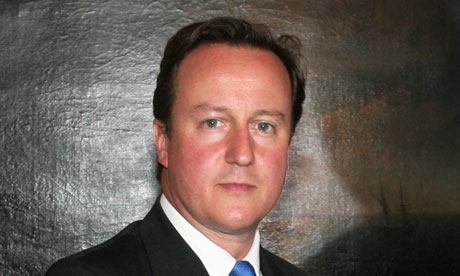
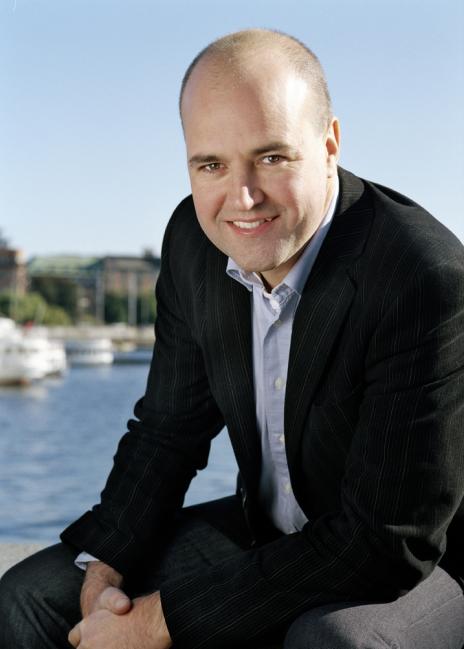
A little more than a year later, the new and bright faced Conservative Party Prime Minister, David Cameron, given the chance to revert the damage done, instead chose to stall his action, upholding the unimportant decision against Savage. Cameron, who has run from his election to the opposition leadership in December 2005 as a progressive liberal conservative, seems wrapped up in satisfying his extended political career as a caretaker leader in Westminster, and not risking his tenure with difficult choices as an executive. Much of the world has held high hopes for the new British head of state, yet Cameron's unwillingness to take up the helm of Churchill, Thatcher, and Blair is costing the country dearly. No matter his Conservative membership, Cameron has an intense desire to be a typical European everyman premier, attune to Yves Leterme of Belgium and Frederik Reinfeldt of Sweden. In these systems, the prime minister can change economic policies, yet social or legal elements remain largely untouched as the nation is preconditioned to stay fixed in government equilibriums for these issues near indefinitely.
Whether Blair, Brown, and Cameron realize or not, their governments are helping extremist Islam to gain more influence and control within Great Britain. Placing someone who disagrees with the religion on a list alongside murderers and Nazis is not prudent; it simply hands another victory to the adrenaline pumped hopes of the most disagreeable. Unless radical constitutional and legal reforms, couples with a new system of government are firmly adopted, the once great empire will be lost to a one time vote for the application of Sharia Law across the United Kingdom. The means for such a horrific bill are present, only requiring elected leaders to turn a blind eye to allow it through.
Michael Veramendi
National Alliance Vice President for Foreign Issues
I think it's best to begin this piece by making a rather obvious distinction: the National Alliance Party shares close to zero sympathies to the political positions of activist and former Green Party presidential nominee Ralph Nader. When one examines even the general viewpoints of Mr. Nader, they are clearly way out of line with both the American way of life, and the concerns of most of the mainstream population. But while that may be true, I feel inclined as a member of this organization to reach out and show him the respect garnered by even the wisest who promote values similar to those of our viewpoint.
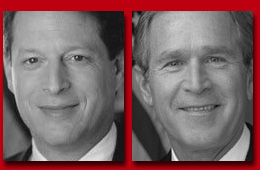
Despite being considered irrelevant by both parties at the onset of the 2000 Presidential election, Nader ascended to a position of the so called "spoiler," after his campaign for chief executive gathered an impressive 2.74% of the popular votes. Since the man's campaign received such a large number of its ballots from the State of Florida, Democratic strategists have since contended that his presence on the voting papers cost Vice President Al Gore the general election.
I feel this is unfair on many accounts, and simply surmises to a juvenile sore loser attitude from the DNC, which could not even take the presidency from George W. Bush in 2004, despite their tremendous advantage, and Nader's far lesser portion of the votes. These can briefly be covered by including Gore's weak campaign, the presidential debates commission, and Nader's own message for the year 2000.
Perhaps in an admirable attempt to avoid the "no clear definition" characteristic given to former President George H.W. Bush after the Republican's copying of Ronald Reagan's image to win in 1988, Al Gore distanced himself, rather disastrously, from Bill Clinton's administration of America. Considering the Arkansas Democrat's tendency to present a record of messy and unsettling personal relationships, as well as the South's aversion to such public behavior, this might actually be viewed as wise, accept for the fact that the Vice President's alternative was nothing short of weak and ineffective.
And so Al Gore became the paladin for environmental protection in the United States, leaving behind the strongest issue for his candidacy in that year: the 3 trillion dollar surplus left by Bill Clinton. The merits of the money reserves can be debated, but no matter what is said, it made a terrific ploy for a strong and difficult to beat campaign. Instead, Donna Brazile, Gore's manager, allowed him to pursue a reckless and shoddy plan which was doomed to fail against the charismatic pro-tax cuts Texas governor, George W. Bush. Fused together, the following ad reveals just how out of touch Gore's message felt to a public in which less than 10% today feel protecting the planet is an important issue (Gallup Poll).
As the election came around to presidential debates, little action was taken by the Democratic Party to help include Mr. Nader, despite his insurgent strength in choice polls and in battleground states. Not surprisingly, the commission for debates, controlled by both former party chairs of the two major electoral factions and a large number of corporations, refused to allow Ralph Nader to attend any of their three sessions, and even went as far as to deny him a seat despite his registered invitation and ticket for attendance. According to commission rules, candidates must poll at least 5% in several national questionnaires before being admitted, and Nader did not qualify with enough support. In minced terms, he was not relevant to the equation--accept that he became very relevant as soon as his movement hurt the Democrats.
Ever since Al Gore conceded the race to George W. Bush, the Democratic Party has attempted to slander the man for his hopeful candidacy, absolutely avoiding how his message drew members of all parties and ideologies to cast their ballots for him in 2000. As noted before, Nader's views can seem ridiculous at some corners, yet his message for the turn of the century was to forge a strong alliance between the people and honest businesspeople in America. The Democrats failed to deliver their historical populist message, and neglected to use the strongest element of advantage: the Clinton surplus. What should have been an easy victory turned into a milestone of defeat as the party scrambled to realign, and failed again, in 2004.
Ralph Nader may never become president, nor should anyone hope he does, yet the man deserves our respect and consideration. Standing firm against two of the largest and most powerful parties in the United States is not cakewalk; it requires tenacity and an iron resilience against the opposition. For all his work, Ralph Nader has seen even his closest friends betray him for the Democratic Party, yet a stronger force is allied with him: countless Americans who desire fundamental change in the system of government.
I wanted to begin the log by mentioning an article which has been centerpiece on the Politico website for much of the past week now. Writer Ben Smith, who is an admirable and objective author, poignantly explains how the Obama Administration has been pushing for peace agreements between Benjamin Netanyahu and Mahmoud Abbas for the Palestine Territory. The full piece can be read here: Decoding the Mideast Peace Rhetoric
Smith reveals an important point about the strong arming of Israel's leader by the Whitehouse in an effort to forge both sides into long lasting and photogenic peace. It's justified to emphasize the word "photogenic," because it is not the first time an American administration has attempted this, a more pointedly, it is yet another example of a Democrat held executive branch doing so.
President James Carter was a good example, with his movement to give Iran freedom from the royalist Shah in 1979, even when the result was doomed to bring about a crisis in the realm of a semi-intifada, which it did. To the president however, supporting stable government was not important, least not as much as gaining approval from the technocratic pen of the United Nations.
Almost two decades later, President Clinton chose to pursue similar action, this time in helping to bring about the dramatic Oslo Accords, another pact shuddering with evidence of impending collapse. To the surprise of few, the Palestinians, led by Yasser Arafat, essentially flashed a vulgar sign at Israel and the United States, refusing to end their conflict to divide and claim the land of the Israeli People.
Today, with the government's incessant concentration on some sort of flashy and trumped up world harmony plan for Israel and the Muslim world, the problem has only grown. Somewhere within the deepest channels of the president's mind, there is an honest desire for peace, albeit a clouded one.
With the increasingly dishonest responses of the Palestinian government, the United States' diplomats cannot continue to play fierce moderator with only the interests of Palestine in their thoughts. Israel is the only state within the Middle East which presently is able to successfully endure as a democracy, as well as our foremost ally, a gift none in Washington should willingly squander away. We have the opportunity to stand by Israel and allow the area to remain more secure, or throw away an ally as Carter did with the Shah for mere idealist purposes. Our duty is to protect the interests of our nation, and Israel's existence is part of those interests. As long as it remains a harbinger of democracy, we must defend and supplant its own efforts to combat terror and preserve freedom in the Middle East.
If the recent legislation and bills passed by both houses of the American Congress show only one thing, it is that the government has not only become isolated from the people, but also addicted to a fountain of rich and self refreshing power. As luck would have it, the lower body is constricted to 2 year terms, a condition which has successfully led to the sweeping of many congresspeople from power, and the transfer of those lawmaking responsibilities to new and less corrupted hands.
Unfortunately, while these tenants remain true for House members, the upper legislative body of our country seems almost entirely insulated from these ever changing electoral lines, primarily given to the simple reality that the terms of its members are staggered, with lengths extending beyond reasonable acceptance for such a country.
In younger days of our government, senators where chosen by state legislatures, a process which almost completely secured that there would be no inexperienced or overtly partisan members in the body. Granted, senators in the past held strong views, yet they new their duty, and stood to defend their state and country's interests above all else.
Now the tables have turned, leaving the people facing a difficult challenge in keeping senators both in line with the people, and moderating the loyalty which they express towards their party on national issues. A good example is Senator Amy Klobuchar, a district attorney who came to the Senate in 2007 despite having little experience besides in the legal divisions, and has developed a strong record in support of generally left-wing policies. Alongside her, former comedic clown and author Al Franken has put forward an equally partisan leaning in the chamber, and his term still does not end until January 2015.
At the outset, there is nothing essentially wrong with states choosing boisterous or passionate senators, but the length of office for these individuals is far too much in relation to the powers they hold. In traditional parliamentary systems, the upper chamber cannot wield so much power that it is allowed to try the executive branch, pass legislation, and send federal money to economic projects.
In the United States Senate, members are almost super-powerful, fully capable of voting strictly along party lines for four years, and then only choosing to serve their constituents effectively once the last twenty-four months before their reelection are in full view.
To serve the interests of the people, these ridiculously long sessions of service must end. To allow an individual who wins a mere three elections, perhaps due to poor opposition, to serve nearly two decades is over the basic limits of good government. As citizens we must demand more accountability, making our upper house fixed to 4-year terms of office for its members, a harsh consequence for members who have sold out the people they claim to represent. That must be our duty in 2011: to secure and new, and more foundational structure in which no one party can exercise mob rule over the decisions which affect our nation's future.
Andrew Rimmer
National Alliance Vice President for Communications
In the information age, it is sometimes easy to forget how slowly the early scientists climbed from near irrelevance to inventing the computerized wonders that now bolster our way of life in the modern day. But the innovators of yesteryear did not find their work coming to fruition simply because they were interested in it, but also because they spent the many hours testing and retrying options before finally hitting the proper result which they were pursuing. To create more employment and build better infrastructure for the 21st Century, the Federal Government must do the exact same thing to America.
Despite our seemingly unparalleled connections of wireless and internet access, countless Americans still remain cut off from cheap sources of web entrance and digital connectivity. Because of the innumerable inventions that have come from the general population experimenting with their work, the government must act to preserve true creativity and the wondrous technologies which we posses in the present day.
Thus the National Alliance Party is proposing a $500 million investment by the current elected officials into the construction of high speed cable and fiber optic lines in economically depressed areas of our nation to speed job growth and technological advancements for the next two decades.
Unless we can get a hold on the separation; the haves and the have nones of this generation, then we risk leaving behind life changing wonders in development and unimaginable possibilities for further product creation. No longer is it prudent to sit back and wait--while other countires surge ahead in the race for ideal and affordable convenience in the digital world. The time is now; our hour, and our mission for the good of the future.