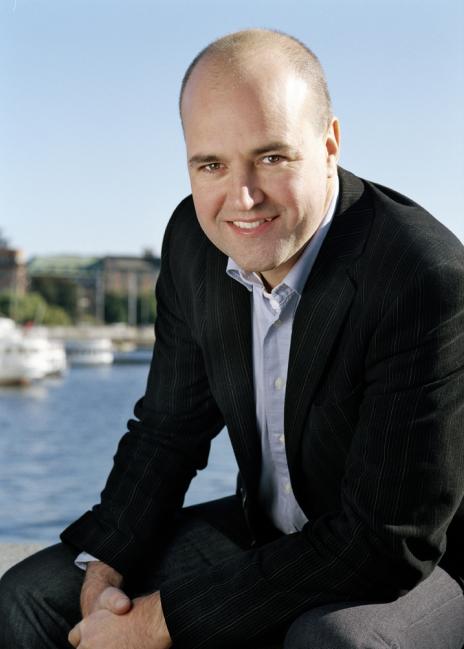
Victories are never built on shoddy beliefs; the illusion of one simply precedes a coming fall. Truthfully, there are few other ways in which to discuss the results of Sweden's dynamic national election only a day in the past, in which Prime Minister Fredrik Reinfeldt lost much of his seemingly enduring "grand coalition" to the right-wing Swedish Democrats Party. Not only should this election be looked at as a referendum on the decay of the European Union to centralized government and radicalized religion, but it also represents a profound dispersion of the once consolidated influence of the probuconservatives, a group of economic liberals and otherwise moderate politicians who have risen to prominence in recent European political history.
Reinfeldt's personal career is a prime example of the growing shift towards liberal conservatism in the Old World nations. After spending some time as an ardent supporter of Swedish Prime Minister Carld Bildt in the 1990s, the young and ambitious activist began challenging his superior's views as too extreme and incompatible, campaigning against the man whom he had helped to enthrone and assisting in the dramatic victory for the leftist Social Democrats in the 1994 general election campaign.
With Bildt and the conservatives humiliated, Reinfeldt amassed his party of support, working to construct a moderate platform under which to unite for his election to the opposition in 2002, and the premiership in 2006. Since his victory, the prime minister has gained ample praise for his fragilely strung together Alliance for Sweden, which was meant to coast to an easy victory in the 2010 election. With his success, Reinfeldt even managed to shift David Cameron from a strong conservative to a flamboyant liberal in time for an expected landslide victory for the United Kingdom Conservative Party in the May 2010 decision moment.
And yet, something has held both Cameron, who now governs with the Liberal Democrats, and Reinfeldt, who enjoys centrist and left-wing support in his coalition, back. The short of it is simply morality. Both men have arguably captured impressive victories politically, but their seemingly unfaltering strides in that arena still cannot endear them enough within their separate electorates to form a lasting dominance over the nation.
Notwithstanding their efforts, probuconservatives feel that by simply cutting taxes or agencies domestically, they can command the everlasting partnership of the voters. Though economic policy is important, it is a useless goal if the party does not provide contrast to the failings of the countless left-wing governments around the globe. Conservatives may not inhabit government as frequently, yet they are called in to reform and rebuild the positive ways of the nation's elder days through good intended social proposals and economic openness to help businesses grow.
If the probuconservatives feel their moderate path is still righteous after their ideology's defeat in the Netherlands, Britain, and now Sweden, then they are missing the reality which faces them unabashedly. Voters want strong conservative leadership in times of crisis; they will throw out those who are simply seeking to achieve goals politically. And although moderate leaders may win races, their reliance on centrist rehtoric can only lead to eventual defeat, as they hand the reins to a more strident partisan months before the next election. These politicians desire self-fulfillment at the expense of the people they claim to represent. In their quests to forge dynasties, they have left the interests of the people behind, choosing to serve only themselves.
I always feel a painful touch of nostalgic melancholy when reading of the great conquests and works of older nation leagues, and how their once indomitable circumferences of power kindled to a dying status as time goes on. And sad as it might be to deal with, I must make yet another warning marker for the oncoming collapse and assumption of irrelevance by the past great nation bloc, the United Kingdom. Even as times change, the fragile delicacy which is the British governmental system remains the same: open to deconstruction, and fragile on the preservation of individual freedom.
Largely, Britain's loss of hope is due to the shifting sands of its constitution, as well as its system of courts and legislature. Although the earliest days of British government by Walpole, and even to Gladstone and Disraeli, the olden parliamentary system worked brilliantly. Nobles presided over the House of Commons, and the prime minister was a mere extension of the still powerful monarchic authority, which at least generally knew best when it came to the country's defense.
In recent days however, the tide of good governance has turned to one instead of insipid and dangerous appeasement rule, threatening the former superpower alongside an equally deadly force in the spreading of Sharia Law within its borders. In modern Britain, a ruling body is formed by the majority party group of the Commons, which then chooses a candidate for the executive office of the nation, the premiership. Providing that the lower house possesses at least a decent majority, they essentially receive a one party mandate for the nation. Never mind the wills of the people, for according to analysts today, the country's system is far more democratic that the so called "imperialistic presidency" of the United States. Besides a slight tenure of bills within the upper House of Lords, most any law can come to the desks of Members of Parliament on a Monday, and be law within the space of several days, no matter how infringing it might be on the rights of the people.
But wait, what rights of the people? Are those not reserved for the incivility of the American system? Without mincing words, those two questions are a key particle of the reason why Britain stands ready to capitulate to the domestic insurrection of religious fanatics to this very day: the country has no central documentation of a constitution. Sure, legal commentators will point to the collections of manuscripts and royal papers which are supposed to supplant a fully adopted document for the British people, but these are hardly enough to guarantee personal liberties and freedom from government oppression.
Consider for example a recent tenant of law adopted by England, which makes the incitement of violence or religious hatred a imprisonment carrying offense. First instated by Tony Blair's Labour Government in 2006, the law gives particular shielding to those of the Christian faith, but its greater focus, after pressure from pro-Middle Eastern social groups, places exorbitant protections on the religion of Islam, which is growing phenomenally fast in Great Britain. While the world should still offer ample respect to Blair for his legacy, this law was potentially his major blunder in the surrender of the royalist nation to the extremist religion. Because although plenty of citizens speaking out against the festering radicalism of Muslim activists have been locked up by constabulary officers, the sword edge reflecting the Muslim population has overwhelmingly been blunted. In fact, the Islamic community did not think twice before helping to charge filmmaker and Dutch legislator Geert Wilders with incitement of racial hatred, as shown here. Yet even as crowds of Muslims advocated the beheading of George W. Bush, Tony Blair, and the end of the British State, the police did nothing to arrest the perpetrators.
All good intended people across the world should hope and pray that Britain's government comes to its senses, yet the likelihood of such an occurrence is not in a healthy range of any sort. For his own part, Gordon Brown only helped to encourage the Muslim extremism during his three years as premier, culminating with the banning of conservative talk show host Michael Savage from entering the United Kingdom in June 2009 due to the man's passionate tirades against radicalism within the Islamic faith.
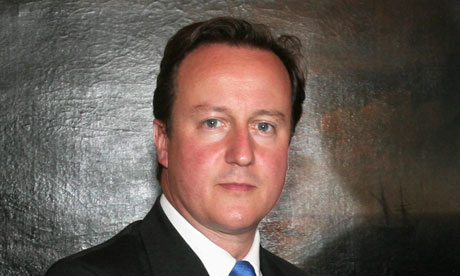
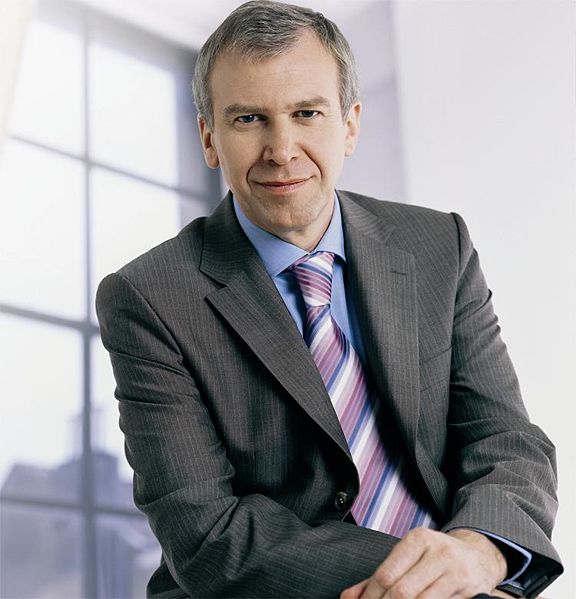
A little more than a year later, the new and bright faced Conservative Party Prime Minister, David Cameron, given the chance to revert the damage done, instead chose to stall his action, upholding the unimportant decision against Savage. Cameron, who has run from his election to the opposition leadership in December 2005 as a progressive liberal conservative, seems wrapped up in satisfying his extended political career as a caretaker leader in Westminster, and not risking his tenure with difficult choices as an executive. Much of the world has held high hopes for the new British head of state, yet Cameron's unwillingness to take up the helm of Churchill, Thatcher, and Blair is costing the country dearly. No matter his Conservative membership, Cameron has an intense desire to be a typical European everyman premier, attune to Yves Leterme of Belgium and Frederik Reinfeldt of Sweden. In these systems, the prime minister can change economic policies, yet social or legal elements remain largely untouched as the nation is preconditioned to stay fixed in government equilibriums for these issues near indefinitely.
Whether Blair, Brown, and Cameron realize or not, their governments are helping extremist Islam to gain more influence and control within Great Britain. Placing someone who disagrees with the religion on a list alongside murderers and Nazis is not prudent; it simply hands another victory to the adrenaline pumped hopes of the most disagreeable. Unless radical constitutional and legal reforms, couples with a new system of government are firmly adopted, the once great empire will be lost to a one time vote for the application of Sharia Law across the United Kingdom. The means for such a horrific bill are present, only requiring elected leaders to turn a blind eye to allow it through.
Michael Veramendi
National Alliance Vice President for Foreign Issues
I think it's best to begin this piece by making a rather obvious distinction: the National Alliance Party shares close to zero sympathies to the political positions of activist and former Green Party presidential nominee Ralph Nader. When one examines even the general viewpoints of Mr. Nader, they are clearly way out of line with both the American way of life, and the concerns of most of the mainstream population. But while that may be true, I feel inclined as a member of this organization to reach out and show him the respect garnered by even the wisest who promote values similar to those of our viewpoint.
Despite being considered irrelevant by both parties at the onset of the 2000 Presidential election, Nader ascended to a position of the so called "spoiler," after his campaign for chief executive gathered an impressive 2.74% of the popular votes. Since the man's campaign received such a large number of its ballots from the State of Florida, Democratic strategists have since contended that his presence on the voting papers cost Vice President Al Gore the general election.
I feel this is unfair on many accounts, and simply surmises to a juvenile sore loser attitude from the DNC, which could not even take the presidency from George W. Bush in 2004, despite their tremendous advantage, and Nader's far lesser portion of the votes. These can briefly be covered by including Gore's weak campaign, the presidential debates commission, and Nader's own message for the year 2000.
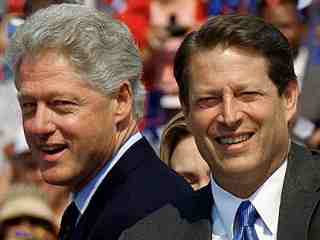
Perhaps in an admirable attempt to avoid the "no clear definition" characteristic given to former President George H.W. Bush after the Republican's copying of Ronald Reagan's image to win in 1988, Al Gore distanced himself, rather disastrously, from Bill Clinton's administration of America. Considering the Arkansas Democrat's tendency to present a record of messy and unsettling personal relationships, as well as the South's aversion to such public behavior, this might actually be viewed as wise, accept for the fact that the Vice President's alternative was nothing short of weak and ineffective.
And so Al Gore became the paladin for environmental protection in the United States, leaving behind the strongest issue for his candidacy in that year: the 3 trillion dollar surplus left by Bill Clinton. The merits of the money reserves can be debated, but no matter what is said, it made a terrific ploy for a strong and difficult to beat campaign. Instead, Donna Brazile, Gore's manager, allowed him to pursue a reckless and shoddy plan which was doomed to fail against the charismatic pro-tax cuts Texas governor, George W. Bush. Fused together, the following ad reveals just how out of touch Gore's message felt to a public in which less than 10% today feel protecting the planet is an important issue (Gallup Poll).
As the election came around to presidential debates, little action was taken by the Democratic Party to help include Mr. Nader, despite his insurgent strength in choice polls and in battleground states. Not surprisingly, the commission for debates, controlled by both former party chairs of the two major electoral factions and a large number of corporations, refused to allow Ralph Nader to attend any of their three sessions, and even went as far as to deny him a seat despite his registered invitation and ticket for attendance. According to commission rules, candidates must poll at least 5% in several national questionnaires before being admitted, and Nader did not qualify with enough support. In minced terms, he was not relevant to the equation--accept that he became very relevant as soon as his movement hurt the Democrats.
Ever since Al Gore conceded the race to George W. Bush, the Democratic Party has attempted to slander the man for his hopeful candidacy, absolutely avoiding how his message drew members of all parties and ideologies to cast their ballots for him in 2000. As noted before, Nader's views can seem ridiculous at some corners, yet his message for the turn of the century was to forge a strong alliance between the people and honest businesspeople in America. The Democrats failed to deliver their historical populist message, and neglected to use the strongest element of advantage: the Clinton surplus. What should have been an easy victory turned into a milestone of defeat as the party scrambled to realign, and failed again, in 2004.
Ralph Nader may never become president, nor should anyone hope he does, yet the man deserves our respect and consideration. Standing firm against two of the largest and most powerful parties in the United States is not cakewalk; it requires tenacity and an iron resilience against the opposition. For all his work, Ralph Nader has seen even his closest friends betray him for the Democratic Party, yet a stronger force is allied with him: countless Americans who desire fundamental change in the system of government.

.jpg)