In an age of streaming rhetoric, it is common for elected officials to attempt to claim some sort of moral high ground on the issues of democracy and human rights. Few can hardly begin to forget the winning ticket of 2008, which was led by two politicians pledging to the take military action in Darfur, which thus far has not come close to fruition. But while Africa maybe the one most frequently reported bodies of land in conflict, there are countless around the world which continue to undergo such difficulties with freedom, and still are overlooked by even the most stalwart of American politicians.
Most evident is the country of Burma, and more pointedly, Aung San Suu Kyi's extended house arrest while the world stands by preaching values which they have not acted upon. Kyi, the all but official prime minister-elect of the nation, has been waiting for more than 14 years for her release; yet now it appears she may in actuality be detained for even longer. While Burma remains under the imperialistic army junta rule, it can hardly be called an imposing country, and one wonders why no members of the United Nations have chosen to deploy security forces to remove and replace the present government.
Beyond its outset, the situation in Burma grouped with those around the world reveal a sad pattern of inaction on democratic values and principles, which seem largely based off of the costs of pursuing such policies. The ill-fated War in Iraq might be viewed in such a way, despite its overall success in reducing human rights violations in the Middle East. Politicians become too concerned with the home front, neglecting to foster freedom and new allies in countries were the seeds of democracy are just waiting to grow, if with some international encouragement. A small detachment of troops would be enough, together with the UN's label, to alter the course of history in so many places were they given the authority to actively combat and eliminate threats to individual and societal free enterprise.
The card may be played that in the current financial crisis, such actions are imprudent, but a disagreement must be had. When the United States won a hard fought victory over Japan in th 1940s, a new pro-business country was established, leading to the dramatic benefit of free market upswing which was witnessed later in the 20th Century. In the same way, elected leaders must look at the countries not as financial burdens, but as tickets to market power. Loosening the hold of fascism over Burma would allow the nation's companies to expand and grow, defeating unemployment and giving the West another lucrative trading partner to do business with.
However, more important is that this attempt would free people and remain in the basking grace of the best interests of human and civil rights. For one who had been awarded the grandeur of the Nobel Peace Prize, Barack Obama should realize this better than most. Standing by when action may and should be taken is not a sign of intelligence, but of weakness. Of course leaders like Kyi may eventually be released, yet their potential during that time of imprisonment is worth noting. How might this brave woman, who has endured so much, have managed to help the world had the administrations of George H.W. Bush and William J. Clinton been more anxious to spread human rights and universal freedom? The facts suggest quite a great deal.
Costs are always keen facts that must be dealt with, yet they should never override duty. If Winston Churchill had worried about the monetary loss of World War II, the world might today be a unified German state. Leadership and true creation of good history is seizing up the moment and taking a chance, always with the best intentions in mind.
No one can begin to predict how democracy will affect areas like Burma and Darfur, but the sooner that they are allowed to experience the wonderful gift, the sooner we can reap the largely positive results of its presence.
Michael Veramendi
National Alliance Vice President for Foreign Issues
Showing posts with label michael. Show all posts
Friday, November 12, 2010
Tuesday, September 7, 2010
The Inevitable Fall
I always feel a painful touch of nostalgic melancholy when reading of the great conquests and works of older nation leagues, and how their once indomitable circumferences of power kindled to a dying status as time goes on. And sad as it might be to deal with, I must make yet another warning marker for the oncoming collapse and assumption of irrelevance by the past great nation bloc, the United Kingdom. Even as times change, the fragile delicacy which is the British governmental system remains the same: open to deconstruction, and fragile on the preservation of individual freedom.
Largely, Britain's loss of hope is due to the shifting sands of its constitution, as well as its system of courts and legislature. Although the earliest days of British government by Walpole, and even to Gladstone and Disraeli, the olden parliamentary system worked brilliantly. Nobles presided over the House of Commons, and the prime minister was a mere extension of the still powerful monarchic authority, which at least generally knew best when it came to the country's defense.
In recent days however, the tide of good governance has turned to one instead of insipid and dangerous appeasement rule, threatening the former superpower alongside an equally deadly force in the spreading of Sharia Law within its borders. In modern Britain, a ruling body is formed by the majority party group of the Commons, which then chooses a candidate for the executive office of the nation, the premiership. Providing that the lower house possesses at least a decent majority, they essentially receive a one party mandate for the nation. Never mind the wills of the people, for according to analysts today, the country's system is far more democratic that the so called "imperialistic presidency" of the United States. Besides a slight tenure of bills within the upper House of Lords, most any law can come to the desks of Members of Parliament on a Monday, and be law within the space of several days, no matter how infringing it might be on the rights of the people.
But wait, what rights of the people? Are those not reserved for the incivility of the American system? Without mincing words, those two questions are a key particle of the reason why Britain stands ready to capitulate to the domestic insurrection of religious fanatics to this very day: the country has no central documentation of a constitution. Sure, legal commentators will point to the collections of manuscripts and royal papers which are supposed to supplant a fully adopted document for the British people, but these are hardly enough to guarantee personal liberties and freedom from government oppression.
Consider for example a recent tenant of law adopted by England, which makes the incitement of violence or religious hatred a imprisonment carrying offense. First instated by Tony Blair's Labour Government in 2006, the law gives particular shielding to those of the Christian faith, but its greater focus, after pressure from pro-Middle Eastern social groups, places exorbitant protections on the religion of Islam, which is growing phenomenally fast in Great Britain. While the world should still offer ample respect to Blair for his legacy, this law was potentially his major blunder in the surrender of the royalist nation to the extremist religion. Because although plenty of citizens speaking out against the festering radicalism of Muslim activists have been locked up by constabulary officers, the sword edge reflecting the Muslim population has overwhelmingly been blunted. In fact, the Islamic community did not think twice before helping to charge filmmaker and Dutch legislator Geert Wilders with incitement of racial hatred, as shown here. Yet even as crowds of Muslims advocated the beheading of George W. Bush, Tony Blair, and the end of the British State, the police did nothing to arrest the perpetrators.
All good intended people across the world should hope and pray that Britain's government comes to its senses, yet the likelihood of such an occurrence is not in a healthy range of any sort. For his own part, Gordon Brown only helped to encourage the Muslim extremism during his three years as premier, culminating with the banning of conservative talk show host Michael Savage from entering the United Kingdom in June 2009 due to the man's passionate tirades against radicalism within the Islamic faith.
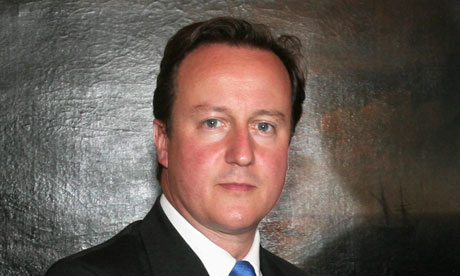
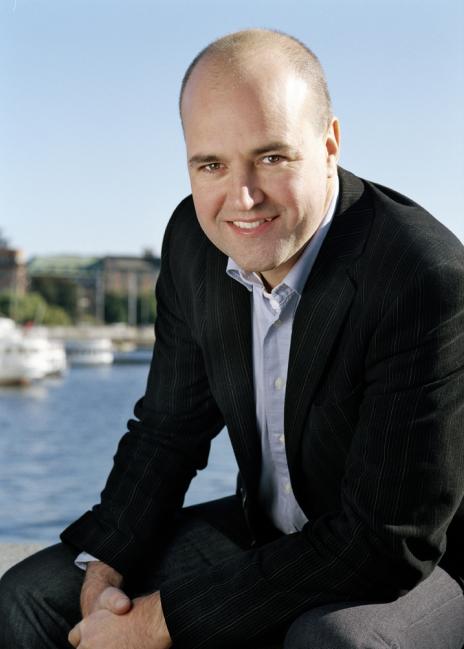
A little more than a year later, the new and bright faced Conservative Party Prime Minister, David Cameron, given the chance to revert the damage done, instead chose to stall his action, upholding the unimportant decision against Savage. Cameron, who has run from his election to the opposition leadership in December 2005 as a progressive liberal conservative, seems wrapped up in satisfying his extended political career as a caretaker leader in Westminster, and not risking his tenure with difficult choices as an executive. Much of the world has held high hopes for the new British head of state, yet Cameron's unwillingness to take up the helm of Churchill, Thatcher, and Blair is costing the country dearly. No matter his Conservative membership, Cameron has an intense desire to be a typical European everyman premier, attune to Yves Leterme of Belgium and Frederik Reinfeldt of Sweden. In these systems, the prime minister can change economic policies, yet social or legal elements remain largely untouched as the nation is preconditioned to stay fixed in government equilibriums for these issues near indefinitely.
Whether Blair, Brown, and Cameron realize or not, their governments are helping extremist Islam to gain more influence and control within Great Britain. Placing someone who disagrees with the religion on a list alongside murderers and Nazis is not prudent; it simply hands another victory to the adrenaline pumped hopes of the most disagreeable. Unless radical constitutional and legal reforms, couples with a new system of government are firmly adopted, the once great empire will be lost to a one time vote for the application of Sharia Law across the United Kingdom. The means for such a horrific bill are present, only requiring elected leaders to turn a blind eye to allow it through.
Michael Veramendi
National Alliance Vice President for Foreign Issues
Largely, Britain's loss of hope is due to the shifting sands of its constitution, as well as its system of courts and legislature. Although the earliest days of British government by Walpole, and even to Gladstone and Disraeli, the olden parliamentary system worked brilliantly. Nobles presided over the House of Commons, and the prime minister was a mere extension of the still powerful monarchic authority, which at least generally knew best when it came to the country's defense.
In recent days however, the tide of good governance has turned to one instead of insipid and dangerous appeasement rule, threatening the former superpower alongside an equally deadly force in the spreading of Sharia Law within its borders. In modern Britain, a ruling body is formed by the majority party group of the Commons, which then chooses a candidate for the executive office of the nation, the premiership. Providing that the lower house possesses at least a decent majority, they essentially receive a one party mandate for the nation. Never mind the wills of the people, for according to analysts today, the country's system is far more democratic that the so called "imperialistic presidency" of the United States. Besides a slight tenure of bills within the upper House of Lords, most any law can come to the desks of Members of Parliament on a Monday, and be law within the space of several days, no matter how infringing it might be on the rights of the people.
But wait, what rights of the people? Are those not reserved for the incivility of the American system? Without mincing words, those two questions are a key particle of the reason why Britain stands ready to capitulate to the domestic insurrection of religious fanatics to this very day: the country has no central documentation of a constitution. Sure, legal commentators will point to the collections of manuscripts and royal papers which are supposed to supplant a fully adopted document for the British people, but these are hardly enough to guarantee personal liberties and freedom from government oppression.
Consider for example a recent tenant of law adopted by England, which makes the incitement of violence or religious hatred a imprisonment carrying offense. First instated by Tony Blair's Labour Government in 2006, the law gives particular shielding to those of the Christian faith, but its greater focus, after pressure from pro-Middle Eastern social groups, places exorbitant protections on the religion of Islam, which is growing phenomenally fast in Great Britain. While the world should still offer ample respect to Blair for his legacy, this law was potentially his major blunder in the surrender of the royalist nation to the extremist religion. Because although plenty of citizens speaking out against the festering radicalism of Muslim activists have been locked up by constabulary officers, the sword edge reflecting the Muslim population has overwhelmingly been blunted. In fact, the Islamic community did not think twice before helping to charge filmmaker and Dutch legislator Geert Wilders with incitement of racial hatred, as shown here. Yet even as crowds of Muslims advocated the beheading of George W. Bush, Tony Blair, and the end of the British State, the police did nothing to arrest the perpetrators.
All good intended people across the world should hope and pray that Britain's government comes to its senses, yet the likelihood of such an occurrence is not in a healthy range of any sort. For his own part, Gordon Brown only helped to encourage the Muslim extremism during his three years as premier, culminating with the banning of conservative talk show host Michael Savage from entering the United Kingdom in June 2009 due to the man's passionate tirades against radicalism within the Islamic faith.
A little more than a year later, the new and bright faced Conservative Party Prime Minister, David Cameron, given the chance to revert the damage done, instead chose to stall his action, upholding the unimportant decision against Savage. Cameron, who has run from his election to the opposition leadership in December 2005 as a progressive liberal conservative, seems wrapped up in satisfying his extended political career as a caretaker leader in Westminster, and not risking his tenure with difficult choices as an executive. Much of the world has held high hopes for the new British head of state, yet Cameron's unwillingness to take up the helm of Churchill, Thatcher, and Blair is costing the country dearly. No matter his Conservative membership, Cameron has an intense desire to be a typical European everyman premier, attune to Yves Leterme of Belgium and Frederik Reinfeldt of Sweden. In these systems, the prime minister can change economic policies, yet social or legal elements remain largely untouched as the nation is preconditioned to stay fixed in government equilibriums for these issues near indefinitely.
Whether Blair, Brown, and Cameron realize or not, their governments are helping extremist Islam to gain more influence and control within Great Britain. Placing someone who disagrees with the religion on a list alongside murderers and Nazis is not prudent; it simply hands another victory to the adrenaline pumped hopes of the most disagreeable. Unless radical constitutional and legal reforms, couples with a new system of government are firmly adopted, the once great empire will be lost to a one time vote for the application of Sharia Law across the United Kingdom. The means for such a horrific bill are present, only requiring elected leaders to turn a blind eye to allow it through.
Michael Veramendi
National Alliance Vice President for Foreign Issues
Subscribe to:
Posts (Atom)