Pages

"A party for the future..."
Showing posts with label change. Show all posts

Wednesday, August 24, 2011

The Revolution: Only for Arabia?

As change-starved rebels begin the final stages of a coordinated NATO assault on the remnants of Libyan leader Gaddafi's 42-year reign and similar events are occurring in the coastal Syria, everything seems so grandiose and far off to the general media outlets of the United States. For them, the paramount events in Libya give them a great news story that fits a bill of perfected Western fascination; a ragtag team of rebellious citizens overthrow the tyranny of a faraway regime and institute an era of freedom and prosperity across the land. Difficult as it was to accomplish, they now have an opportunity to change the country -- nothing better to warm the American heart, right?

Still the question remains: is the revolution something only for backwater nations who desire to throw off dictators for life, or a universal action to be taken by all nations in defense of common liberty? Our founding document may be respected across the land, but repeatedly leaders in Washington have defied its rules, violated its tenets, a committed acts that earlier generations of Americans would certainly not stand for. And we sit on our hands, calling for a restorational election that has little hope of occurring as long as candidates and officials can spit on the only reason America is not an authoritarian power or the socialist's paradise.

When the current president makes a point of ignoring the necessity for a declaration of war, breaking the principles of the War Powers Act, and even disregarding a UN resolution by helping the Libyan rebels through the CIA, we as Americans must question how far the Constitution can be bent or dodged until liberty and individualism evaporates altogether. No matter how important it may seem to a power-hungry administration, dropping adherence to the swearing document of all federal officials in the name of security or national interests cannot continue to be center to presidential policy, for it risks undoing the nation altogether.

Americans struck a blow against unconstitutional behavior with the elections last year, and yet there is little evidence to suggest that even a plurality of the representatives have any interest is truly undermining the anti-founder mentality that permeates throughout Washington to this day. Both the president and the two leaders in the Senate took an extremely hands off approach to the budget debate several weeks ago, leaving many to wonder whether fundamental shifts in fiscal policy are of any interest to even the most ardent in opposition to "runaway spending," and "job-killing taxes." In short, those who speak the loudest have become hypocrites when it comes to practicing their rage, creating a masterful dilemma for citizens against oppressive, anti-Constitutional government.


(Photo credit goes to createyourownrealitynow.com)

Do we wait until perhaps a Constitution-abiding candidate is miraculously elected to office, or must we use the other more sinister option. Should we mount a revolution? Of course the entire suggestion seems radical to our supposedly modernized intellectual brains, but is it? The Constitution's second order of business was not to provide public access to weapons solely for the occasional hunting season, but for the common defense...and in case of a tyrannical government violating rights in the document. We may not have reached bedevilment from the capitol as extreme as that seen under Germany's once-powerful National Socialist Party or Kim Jong-il, but tossing aside blighting of the Constitution as irrelevant due to circumstance only gives those who would do away with liberty a stronger foothold in America. 

In no way does this mean we as the Alliance are calling for an armed revolution -- in fact, any actions taken should and likely would remain bloodless, but failing to elect a true believer in the Constitution in November 2012 may well necessitate a movement to install a person who does, while enforcing penalties against those who violated the founding document in the past. Were it pulled off correctly, such a change might pave the way for an economic revolution through policies which secure and preserve American liberty in the long-term.

No one desires conflict,  but no cause of man is more just than the eternal defense of freedom and individualism throughout the world. Tyrants will only triumph when those who claim to love patriotism and a liberal system refuse to answer the call in defense of the nation. 


Jordan Wells

National Alliance Vice President for Policy

Wednesday, April 6, 2011

Bush III

"My old friend you say? Impossible, I do not recognize the man--or if I am wrong, then he is not what he once was."

It's hard nowadays for Americans to understand exactly who their president actually is. Carter, the dithering southerner, Clinton, the charismatic centrist, or perhaps Reagan, the free market king? In truth though none of these labels seem to stick to the man who presently leads the United States. For although on the domestic front he has advocated policies in contrast to his predecessor, Barack Obama's foreign policy has started to look increasingly like George W. Bush's as each month of his first term roles along. 


During the 2008 campaign Obama was especially clear on several key policies from the Bush years which he intended on reversing: the Middle Eastern wars, Guantanamo Bay, and military tribunals. These were bold positions which the young Democrat fiercely hammered out amidst the closing days of the race, although his popular vote margin of victory seemed to shrink from some polls, landing at a modest 53% despite the structural advantages native to his candidacy.

Thus far, the tally is non-existent. The president did move to end the Iraq War, but only after deploying more troops to Afghanistan and delaying the withdrawal deadlines because of security concerns raised earlier by his opponent, Senator John McCain.

The infamous prison facility has yet to be closed due to firm bipartisan opposition to the prisoner transfers, and only days ago the administration solemnly announced that Khaled Sheik Mohammed would be tried using a military tribunal--a far cry from Obama's call for civilian trials over the past two years. Additionally, Obama has authorized more drone strikes than his predecessor, a massive diversion from his charming liberal image.

Perhaps the greatest similarity however resides in the domain of foreign invasive assaults. After years of bashing Bush for invading Iraq without basis, the new president turned and used military force on Libya, actions which have few justifications other than oil pursuits by most considerations. Funny enough, as this was the foundation for left-win attacks on the Iraq War. Obama has claimed there are no boots on the ground, but CIA have been deployed readily and he commanded Gadhafi to step down only weeks ago.

Shocking as it may be to liberals and conservatives alike, Obama's evolution is another testament to the security over party worldview held for so long in American political interests. Rather than his party or ideology, the president is pursuing national defense, a testament to his desire to protect and preserve American Freedom. This fundamental transformation is what has helped American endure in the past, and will no doubt benefit her in the future.


Michael Veramendi

National Alliance Vice President for Foreign Issues

Sunday, March 27, 2011

The Better Revolution

While the vast majority of recent revolutions in the Middle East have been radicalized ventured seeking to displace moderate dictators, the unrest which is occurring presently in Syria presents a rather unique and rare opportunity to fundamentally change the anti-American nations with Soviet ties into a working partner to foster democratic change that will shake up the status of the region and encourage long-term stability.

Syria as a country has historically been outside of America's list of dependable allies in the Middle East. After nearly 30 years of President Hafez al-Assad's rule, the country was transferred to a brief interim leader before the late ruler's son Bashar ascended to the generational throne of power. And ten years later, he shows no signs of desiring to emphasize moderation, especially considering Syria's close ties with the former Soviet Union and the more liberlized image it maintains about the Middle East. 

The revolution however is a unique attempt which America can use to bolster better diplomatic relations with both the country itself and its souther neighbor, Lebanon. It is primarily through Syria and Lebanon that Saddam Hussein managed to hide his nuclear weapons, and the two nations regularly pose an imminent threat to Israel through their strategies of shipping weapons to Hizbollah and related terrorist groups. 


(Photo credit goes to yourjewishnews.com)

More directly, a regime change in Syria would mean that the axis of radicalized powers surrounding Israel might finally be balanced to offset the rises of extremism in Egypt and Libya, as well as Iran. These nations have repeatedly posed a dramatic threat to international security, as well as the proliferation of human rights, and cutting their alliances would systematically reduce their influence to a great degree and guarantee further freedoms across the Central Eastern region.

Like other nations around it, Syria is critical to stability in the area, but it should not require the force witnessed in Iraq to bring it to its knees. The fear and imperialism of the al-Assads can finally be mitigated, but only if America is wise enough and acts to properly end this solidification of raw extremist power. We must act and be confident in the interest of the present day and generations of the future.


Jordan Wells

National Alliance Vice President for Policy

Friday, February 18, 2011

A Deadly New Axis

Something very troubling should stand out to all the more educated and clear-minded individuals residing in the United States of America as the protests of the Middle East take full force. Egypt managed to denounce and remove its president, and the signs of change are visible in Libya, Yemen, and Bahrain. Yet unlike the fantastical image which the media likes to portray, these movements are no more beneficial to American security and prosperity than the rise of Nazisim was to industry during the 1930s, something which many came to regret following the Great War. By rejoicing over these negative issues American citizens are placing themselves on the chopping block for future conflicts in which front line soldiers will be expended to recreate national security on a larger  and more international scale.


 (Courtesy of travelnotes.org)

Make no mistake, the revolutions are exciting, yet even as they reach climax their results leave behind a muddy trail of violence and extremism that threatens to solidify into new radicalized states with common goals of anti-westernization. This is why all the freedom-lovers of our nation have been cutely suckered into the vision of new democracy amidst the reality that most of them do not fully understand how its manifestation will take place in the Central East.

Traditionally power in the region has been regulated by a crescent axis around the State of Israel, America's foremost ally and the one more democratic nation there. About its borders, the breakdown allows for a number of more secular governments and religious authorities to "balance out" the rhetoric and thus keep each other safer. Unfortunately the rising protests in Egypt and other nations threaten to throw this division into upheaval by placing more radicalized dictators into power. With Iran and Egypt the larger secular countries both under the dominion of extremist ideologues, international security suddenly becomes more complex than the average foreign service member is used to.

It may be easy to feign security, but the reality stays that the nation which has most forcefully responded to the rioting citizens is not the demonized Mubarakian Egypt, but the intensely fundamental Iranian government. Why? Because Iran's leadership wants to join not Mubarak or Ben Ali's fate; they want to be at the helm of the Syrian-Lebanese-Muslim Brotherhood Alliance that will seek to destroy Israel for the sake of religious achievement once America's former allies have been swept from the territory.

In simpler terms we will face the quagmire of maintaining Israel's position while the more wealthy Middle Eastern bloc remains cemented against both American foreign interests and the Jewish State.

Though this reality is less than satisfying, the incapable response of President Barack Obama is more discouraging. For an executive who is well-educated and spoken, his grasp of the problems facing the region are rudimentary at best. Rather than supporting the 2009 Iranian Revolution, he stepped back under the guise of multiculturalism, losing an opportunity when bloodlessly the U.S. could have instated democratic reforms by assisting the activists with clandestine support. Now the government is using force as a response, and the president has failed on a major level to realign the axis to partial secularism.

Little can be done to predict the future, yet the track record of the region is primarily one of fission, not its counterpart. Missteps like the one made by our president only excerbate the issue of maintaining international security for the long-term.


Michael Veramendi

National Alliance Vice President for Foreign Issues

Tuesday, February 1, 2011

Dial R for Radicalism: the Case for Mubarak

It's become commonplace for the West to enjoy jumping up to side with revolutionary forces in nations without much grasp of the target nation's histories or its importance as a stable diplomatic and commercial acquaintance. As should be expected, a great number of Americans have seized unto the protests in Egypt as a positive sign of the country's progress while at the same time disregarding the usefulness of its current leadership to both Middle Eastern stability and their own personal lives. Americans and other westerners are on the brink of igniting a radical movement in Egypt which promises to provide the region with added strife both politically and militarily in the time yet to come.


Hosni Mubarak's concession of his power which may even devolve into resignation was welcomed with open arms by much of the West in the last 24 hours, including statements of favoring by leaders like former U.S. Governor Mitt Romney, who is readying for a presidential campaign. Unfortunately, his exit also leaves the country weakened and at the mercy of a perhaps worse force: the Muslim Brotherhood and Mohammed ElBaradei.


The latter has poised his movement as a democratic change ideological concentration attune to those prevalent across African states, yet his true intentions are veiled by a sketchy record of divided commitment to the West and his own ideological foundations. Best known for his work as an international nuclear power inspector, ElBaradei certainly has made a career for himself--though regrettably through means contrary to the good of the Egyptian people and Americans. When a missions directed him to Iran, he gave a vague report which seemed almost sympathetic to the Shiite power and its executive of questionable mental capacity. This activism has certainly ennobled him to minorities in the Middle East, yet it poses a threat if he becomes president and allies with the Persian nation to destroy Israel.


Perhaps this implication is in poor taste, but with the strictly fundamentalist Muslim Brotherhood standing tall behind him, one must proposition to understand how a fiercely anti-West organization will refrain from implementing its own ideologies if immersed in the pools of government at the heart of Cairo.

Americans must consider the negatives of a non-Mubarak government as well. With control of the Suez Canal so critical to our shipping, one can only speculate at the severe cost should a fundamentalist government choose to restrict passage and play American companies off of our country's support for the State of Israel. ElBaradei by his own accord is hardly a pro-Jewish figurehead, and there is little reason to expect him to remain neutral should a conflict arise.

Possibly more unnerving is the coalition of theocracies which might very well form should Egypt fall to ElBaradei and his allies. Lebanon's Saad Hariri's government left office weeks ago and was replaced by Hezbollah-backed ministers of state, Jordan's government recently resigned, and Iran has been dominated by the Ayatollah for the better section of 31 years. Adding Egypt to that coalition is hardly wise, even if the prospects seem endearing from afar.

Countries like Egypt need change, but as the world witnessed back in 1979 with the Iranian Shah's defeat, revolutions have consequences which can remain for years on end. Progress must be gradual and wise, or it will likely turn into a new possessive and unrelenting nation of directorial government, albeit with a new flag.


Ayla Samadi

National Alliance Vice President for Cultural Issues

Wednesday, January 12, 2011

Democracy Prevails: Southern Sudan

For nearly seventy years, international bodies tried without significant avail to reach a peaceful discourse between the northern and southern regions of Sudan, yet in 2005, a movement towards the right solution finally took flight. Although not a push for unity, the measure has culminated into the secessionist election of this present week, which for all intents and purposes looks set to result in a new southern province.


Southern Sudan has shown the world that oppression can be overcome by the people, though sadly without even the slightest inclusion of much UN action, which has become commonplace in these areas of genocide and abuse. Fusing activism and governmental principles, the people of the strongly African state have managed to prove their own tenacity in overthrowing the Arab-controlled north, according to most reports.


In a strong promise of democratic rule, the region's executive, Salva Mayardit, has pledged to be an open and free ruler of the new country who will tolerate almost all self-expression by its citizens. The region's oil may also become a valuable source of its economy, potentially overpowering the less resource-laden north by means of its control.

Steps still remain to the country's penultimate freedom however, as a six month program of negotiations must first take place before the new country becomes fully recognized by international bodies. Both sides will need to decide how to fairly split the remaining oil fields and who will control most of the new nation's foreign affairs. These further milestones need to be reached carefully and without angering one side so that the current hate is permanently engendered between the two ethnic and geographic groups.

The international world should join with the southern province in celebrating the new activities and developments achieved by sacrificial decisions by so many citizens over the past three generations in particular. Sudan has accomplished an admirable victory against the forces of overwhelming corruption who sadly infest much of the world in the present day.

America has much to look forward to, so today is the time to welcome this new country into the world as a strong ally for democracy.


Ayla Samadi

National Alliance Vice President for Domestic Affairs

Tuesday, January 11, 2011

Defeating Hunger With the Green Revolution

In the wake of the Haiti disaster and now Southern Sudan's upped need for food, international agencies must consider the option of Green Revolution farming, a method that uses a combination of critical resources to grow larger amounts of a given crop and thus feed more individuals at a given time. The measure has been known now for about thirty years, but it has yet to be fully applied to the situations of today, and it's hard to think of a better time.


Green Revolution farming first originated in the 1950s after researchers concluded the present agricultural production would not be enough to satisfy demands of population surges in India and Africa. Twenty years later, the program took a second stage of development, helping India to double its food supply in an average year through enhanced techniques.


Based on a system of highly-charged particles and chemical fertilizers, the farming tool rapidly grows usable crops before restarting the tilling area for a second wave of plants, thus ensuring that something is always thriving regardless of the time. Scientists place the seeds alongside pellets of modified materials underground to ignite a chain reaction to speed the maturity of a focus plant, thus providing an average of twice as much food to a single family or farming area.

Because it alleviates the massive cost of foreign aide, the farming project is also a dynamic way through which nations of the world might shave off parts of their annual expenditures which might otherwise have to focus on providing one-time deliveries of food. The plants continue to reproduce which continued injections almost without limit, leaving a less  problematic situation behind during which they would be forced to regularly replant specimens for its total effect.

Although the program is not without its own demerits, the long-term goal is of foreseeable change in the seemingly unending cycle of poverty and hunger through many countries. Population must eventually be brought to a reasonable limit, but this program will help young children in poverty to not suffer due to their parents' decisions.

Hunger is a terrible travesty in the world, and it is our time to use the resources available to combat it.


Michael Veramendi

National Alliance Vice President for Foreign Issues

Thursday, December 9, 2010

The Test of Paulism

In what some see as a dramatically surprising result, Representative Ron Paul of Texas has been tapped to lead a Federal Reserve oversight committee in the 112th Congress. After the years of discussion and observations, the former libertarian presidential candidate is going to have the chance of a lifetime not only to speak--but also to act on his anti-federal views, setting up for a potentially colorful smack-down between him and the other pro-Wall Street Republicans.


Unless...his words are stronger than his actions. For as much excitement as this placement may garner among political neophytes and standard bearers across the nation, Paul must be able to prove that he can use a position of leadership to effectively get the job done--not only advocate for its completion. Political truth-tellers will always be a novelty in any country and America is no exception, yet there is a time for speech and then a time for putting rhetoric to forceful outcomes. Even the constitutional firebrand's heroes, the American Founding Fathers, knew that at a certain point in their movements against the British they would need to use courageous action, pushing through the preliminary boundaries of activism and to the valleys of freedom from oppression beyond.

The Campaign for Liberty and Ron Paul must now be willing to end their activism dash and shift to a more administrating mode in which they control policy; not just words. With the heavy number of GOP members in the House who firmly subscribed to the Tea Party, as well as others in the Senate, there should be noticeably less difficulty for the new politicians to decry the tactics of old and move forward with policy to either audit or even abolish the Federal Reserve once and for all, fulfilling their commitments and members of a cause for national renewal for which they have so long belabored to stress in government.


Obviously the largest test to this successful venture will be the tenacity of the movement's own Speaker, and whether or not he agrees to show the leadership which so many of his better informed political flock had hoped for if his had won the presidency. If nothing else, Ron Paul must except that as the subcommittee oversight chairman he should act in the best interests of the people--not simply as a poster boy for libertarianism. He must rise to propose viable legislation which the majority will support and which can become law, and work as a member of the leadership, not as a caucus of one in the House.

Ideology is the basis of action, yet it cannot be a substitute, and this is the reality which Dr. Paul must be willing to except. No longer can he claim a singular status as an advocate with no voice; his position immerses him directly into the government, with all of its perks and negatives. Strength and the courage to use it are the true factors which will allow him to either succeed for the people, or collapse politically in a withdrawal from his responsibilities.    

January 2011 and the months to follow will test the cores of Paul and the Tea Party, deciding whether they are made of true conviction form which actions can spring forth, or empty rhetoric which dies in the moment of dire need.


Dana Bault

National Alliance Vice President for Finance

Tuesday, November 30, 2010

The Strongest Defense

I was rather intrigued after watching a lengthy film which pushed for the view that the Russian Armed Forces are more united and supremely more skilled than the average U.S.Army Solider. The argument falls on largely the basis that in Russia, the environment and and surroundings equate and add to an upping of the general skill and readiness of the common soldier; a fact that it does not apply to the American defenders of liberty. After some further research however, I came up with my own analysis, albeit with a starkly different conclusion.


According to international statistics, the Russian area is defended by roughly 23 million active soldiers, far more than the present number of American troops. While this number is considerable, it comes hugely from the process of conscription that occurs within Russia's borders, forcing many young men into involuntary service during their careers.

Further, the reports explain that while most of Russia's volunteer forces are considered quite effective and united,  its larger units of enlisted conscripts often reveal great percentages of AWOL troops, soldiers who are on the run from their posts of duty. So despite the massive number of troops available, the Soviet bloc has yet to discover methods to keep those numbers in line, showing a clear weakness in their structure.

Additionally, Russian troops receive among some of the lowest pay and benefits of any major nation of the world, perhaps explaining partially why the numbers of deserters are so high.


Notwithstanding these elements, the major reason as the data shows is that Russia forces so many young men to join the armed forces, likely against their will. As America saw during the War in Vietnam, drafted soldiers had a tendency to preform poorly, commit atrocities, and return home to bash the military operations preformed abroad. Because America allows for choice, its members cannot claim that they do not wish to be involved in a war and have been forced against their own will. Politics rarely divide uniformed members, and the focus remains upon completing the mission, not serving oneself. If Russia were to take this reality to heart, moving for full implementation within its military assembly, the numbers of its soldiers would fall considerably, yet their power would be more directed and useful.

The 21st Century is one in which human rights--and will, must be respected. Forcing a person to don a uniform and obey an institution which they hate does not foster good performance or hard work; it encourages weaker actions and less confidence in the military. America has learned this, yet Russia still must understand it for future success.


Michael Veramendi

National Alliance Vice President for Foreign Issues

Thursday, November 18, 2010

Humility's Sabbatical

As much as he would probably hate to admit it, Barack Obama could learn a thing or two about public relations from none other than his love-to-hate predecessor, George W. Bush. Through all of his mistakes, gaffes, and embarrassments, the former president demonstrated a considerable calm demeanor, shrugging the dust off and in a way, staying above the chaos of partisanship. With dangerously fluctuating approval ratings and a soured market which shows little interest in recovery, the current president runs the risk of defeat if he maintains the appearance of elitist ignorance towards the problems facing average Americans.


Pundits dating back to the early stages of the 2008 campaign lavished then Senator Obama with the shining "New Clinton" title, hoping to pull off a dramatic 1992 repetition defeat of the GOP establishment with a massive conservative/moderate coalition in the Democratic camp. For all intents in purposes, the candidate's speeches, which went from buoyantly liberal in 2007 to remarkably right of center in Fall 2008, carried that message home, sending keeping John McCain in Arizona with a modest enough 53% of the national popular vote. To the media, it was over, with the new charismatic democrat in power and a flimsy Republican ramshackle to stand against him. Except...there was a unique difference.

Unlike Bill Clinton, Barack Obama was no poor Southern boy with a small town charisma to sweep the nation; his career was built on community organizing, particularly with a strong black constituency base in northern Illinois, as well as considerable union money. Obama had never stood against the tide in a state with unfriendly colors; reaching the senate with a jaw dropping 70% of the total vote--and against a carpet bagger radical too. He may have gone to Harvard Law School, but his parents' achievement of PhD's hardly gives him much credit for his knowledge, which was passed on by his considerably intelligent father, Barack Obama Sr. Clinton's own paternal figure, a drunkard and violent man, offered little to help his son graduate Georgetown, Oxford, and then Yale Law School.

So when Barack Obama railed about "no tax increases," and "a strong small business economy," he bought the hearts of the people long enough to win election--and now that energy is vanishing. In the face of crisis, the president appears as if he must be reminded of the plight of the people, evidences in his haughty and long-delayed assumption of responsibility for the disaster cleanup in the Gulf of Mexico.


It is not to say that he has not been speaking out; only that his words are lost to the masses who desire straight talk and a charismatic interpersonal honesty--both elements of the Bush and Clinton style. To the average American his speeches are adept for sure, but they lack the genuine acceptance of everyone to resonate with the majority of the public. Even within his own writings, the president is remarkably syrupy with his words, weaving every sentence into idealistic matrimony between verbs and paragraph breaks that seem anxious to prove the worth of his terrific education--and still come off as out of touch with the common man. If the commander in chief were to alter his rhetoric, tossing in a gaffe or two in balance with his theatrical command of English, he might manage to dissuade a public which now more than ever appears intent on throwing him out of office in 2012.

Contrary to what the president might have viewed it as in the days leading up to his election, the Oval Office is not, and will never be, an office meant for the most elite. The Senate, filled with millionaires and the most skilled at the political game is the place for those persons in political society. Though once in a while they may reach its hallowed frame, their ultimatum will approach soon if they fail to shake the heavy dust of self-appreciation from their suits and move forward for the people. Barack Obama now has 2 years to make this change--or perhaps he will be changing residency.


Cate Ashton

National Alliance Vice President for Operations

Monday, November 15, 2010

Solving the Crisis in Catholicism

(Editor's note: Although Tom Garrow is a good friend of the National Alliance Foundation's leadership team, his views are not necessarily those of the entire organization).


Morality and sensibility are both elements which the world seems to be ever so frequently robbed of, and thus religious institutions must often serve as a counselors and guides to restore much of the world unto a righteous track that seeks to espouse these two virtuous parts in the formation of generational stability. Generally speaking, the Roman Catholic Church has done a fine job of this responsibility over the past centuries, yet I am forced to take up the dreaded mantle of the justice observer a point out the area in which the religious tent has failed--both utterly and needlessly: lifetime celibacy for its priests.


It must be made evident that I am a Catholic, proud and of strong faith, yet I refuse to continue to endorse a binding rule which has proven to have devastating effects not only on the basic welfare of Catholic spiritual leaders, but also on the psychological development of countless children. Perhaps not all offending religious figureheads are from my church, nor are all crimes involving the molestation of children exclusive to the parishes, but the vast majority are, and for an almost entirely explainable reason: like ever other human, Catholic priests are fallen creatures; saved by a loving God yet never capable of attaining perfection--unless they are in Heaven itself.


Not only is celibacy strictly against the teachings of the Bible; its tenets suggest a scenario which realistically none of us can hope to achieve: perfected spiritual leaders. For precisely this reason, Jesus Christ, the only flawless man to walk the earth, was sent to atone for the world's sins, so that all those born into the world a presently living at the time of his sacrifice would be saved from an eternity in oblivion. In plainer terms, priests are not free of sin because of their occupation, yet at the same time, they were never intended to be! Just like leaders in any other faith, priests are meant to serve as guiding clerics, not holier than thou personages.


From the most liberal to the most zealously conservative Catholics, their is a long running commitment to the family, and as such families adhering to the faith look to prime examples of strong and faithful relationships in life. Keeping with this line of belief, why should our priests not be permitted to have mature sexual relationships, become married, and beyond this, have children, if all of these might serve as a beacon and image of success for a congregation of families? It might be added that the Bible makes no discrimination with the following verses. "That is why a man leaves his father and mother and is united to his wife, and they become one flesh."--Genesis 2:24. "Marriage should be honored by all, and the marriage bed kept pure, for God will judge the adulterer and all the sexually immoral."--Hebrews 13:4. Even more explicitly, Proverbs 5:18-19 notes that "May your fountain be blessed, and may you rejoice in the wife of your youth.  A loving doe, a graceful deer—may her breasts satisfy you always, may you ever be intoxicated with her love." Passages like "honored by all," and "your fountain," hardly can be proven to refer to only those beneath the Church's leadership, neither in their independent form or in the full chapter context. 


The attempts within the media to demonize priests may draw some appreciation, but the core of its argument remains ignorant of a valid fact of debate: the very cause of the inhuman crimes targeting children. Some of the most open-minded people would look at a 5-10 year period of celibacy for priests in the seminary or recently graduated as reasonable, though the expectation that these men live their entire lives without the natural satisfaction of intimate relationships is wholly unrealistic. Priests are not compensated marvelously in worldly manner, so they must rely on God's work alone as the greatest payment--an evident difficulty while living life in "single" status.


That's not to condone any of the horrific and unjustifiable actions by priests against altar boys around the world, yet the initial beginning of the heinous sin should be acknowledged, both by the lowest of spiritual leaders and the most elite, including the Pope. Living a life of both little material reward and physical separation is enough to drive an average person mad, and most priests are not immune to such crippling realities. I regret the bluntness of this, but if many of the clerical heads in the Church were permitted to "get it on" with members of the opposite sex as everyone else is, my belief is that the rates of abuse would drop noticeably over shorter, and longer periods of time. 


Not one of us, from the lowly beggar to the Pope himself, can claim perfection or even a state that fulfills a small minority of its requirements; in other terms, we are a fallen and weak race. But it is for this reason, that God, in all his shining perfection, chose to send a miraculous Savior, steering us away from an inevitable and painful death through His indescribably wonderful mercy. As part of that decision, He allowed us all to live normal and balanced lives--essences of life which would bring glory to His kingdom and to the earth. In the creation of future priests, the purpose was to raise up messengers of God on the earth. However just like those priests are equal to all those whom they guide, they are entitled to the same permissible pursuits and actions of average spiritually faithful individuals. 


Tom Garrow


Adjunct Writer--Of Faith and Life Blog

Wednesday, November 10, 2010

Notes on the Border: A Liberal's View

(Please note: this piece is part of a two section opinion series on America's solution to illegal immigration. Neither article forcibly represents the views of the National Alliance Foundation)

In the age of the Tea Party and the conservative revolution which it embodies, it's sometimes easy for us to be swept up in the moment, forgetting the hard facts and truths about where we as a nation have come from, and were we may go if we do so in a united fashion. To be clear, I'm not a Republican by a long shot; I dislike the policies that too often fringe on pro-corporatism and outsourcing of American jobs, which can be tied directly to the immigration issue, as will soon be covered. Instead, my registration is Democratic, and I favor a more realistic approach to immigration, and indeed one which I think even my red state friends can come to agree with me about.

Spend even a few hours with a family of South or Central American descent, and almost universally they display and incredibly noticeable pro-familial attitude towards life, which, strange as it may be, is very conservative! Many Latinos own the small businesses of our nation, harvest the produce for our organic markets, and provide wonderful environments for growth even for other Americans under lesser circumstances. Even in the poorest of conditions, Hispanic families cherish a warm and united feeling between their members, inspiring those around them and in the case of the small business owners, creating jobs.


This is why I cannot abide to the GOP's near insistence on not only alienating, but going so far as to demonize the immigrant community for being as they will. Of course assimilation is necessary, but does anyone really want to chase away the pro-family attitude of the majority of these immigrants? Considering the mounting divorce rates spreading across the land like a plague, how is it hurtful to to bring in a culture which predominantly is advocating monogamy in marriages and a close knit, conservative way of life?

Whenever he border security issue comes up, my good Republican friends are always ready to pounce, delivering a blistering tirade against the problem of the open border, and thus sidelining the countless Hispanic immigrants who have made the lives of others better in this country through their courageous openings of businesses and shops. And regardless of the hard right conservative mementos of the Spanish language as some festering virus, most second generation immigrants speak near flawless English while their parents may pass on still communicating in their motherland tongue. If this seems untrue, then I urge my conservative detractors to listen to a speech by their newly enthroned bastion of Reaganism, Senator-elect Marco Rubio of Florida, whose parents were Cuban immigrants, yet he today speaks flawless English.

Solving our issues with the border is by no means about trying to marginalize and cut off one source of new American citizens in the form of the Hispanic community. Looser legal immigration restrictions, more protectionist job opportunities, and further investments in math and sciences are what will help us build a more united future as a true melting pot culture. This image does not need to be scapegoated habitually by the GOP, nor by the more traditionalist Democrats. As Americans we are not exclusive to one race or one party, but instead to a legacy of pride and honor as the last hope for freedom and enterprise in the world.

Let's work together; not apart.


Rick Mendoza

Adjunct Writer--Latino Coalition Blog

Monday, November 8, 2010

How to Fix the Budget Deficit

Even the most optimistic observers have to admit that America's present budget deficit is both an unsustainable and irresponsible creation of governments unwatched and unregulated by voters in the past 30 years. With national debt at a staggering $13.4 trillion, even the least engaged should wonder at just how further generations are expected to deal with the overwhelming challenge of negative intake versus spending for the depleted coffers of Washington.

Raising taxes is always a possibility, but one that hardly guarantees real change. Essentially Congress would need to raise income tax rates to 15% at the minimum, driving families into further destitution while failing to fully secure a change in revenue. And of course there is no mandate forcing Congress to use those taxes for the budget deficit; they might easily add it to their own means of extorting earmarks or championing district spending projects.

No, while taxes are an option, they aren't the first factor of the equation which we must consider. The real solution to America's troubling financial instability is the dramatic cutting of spending, across the board, to foster a steadily decreasing budget issue. Most figures show that the HHS Department and Social Security make up a massive majority of the total spending in America, trailed only slightly by the Department of Defense. These programs all promise good intentions, yet at east small fractions of their total cost could be eliminated in order to fix our revenue and spending dilemmas.

Initially, the closure of unneeded military installations in Europe would be a start for the Department of Defense. Several positions are generally unnecessary, and so shutting them down would benefit the country. In fact, transferring stationed troops to the border of Mexico would be enough to combat the rising drug problem between our countries, which could help eliminate casualties and save money from the largely less than stellar DEA. To be clear, no funding should be cut from the troops themselves, yet many of these bases are simply a drag on our budget clarity.

Some smaller alternatives also exist. The Department of Commerce has turned into a useless organization that makes plenty of briefs and presentations yet hardly has a beneficial impact on our nation's economy. Thus I would move to propose that Congress pass a 5-year mandate on the agency, allowing workers time to gain new employment or even start their own companies before its dissolving. In branching off of this, the departments of labor, personnel management, housing, environmental protection, and homeland security should all face similar mandates, thus cutting preliminary articles down to a more realistic budget condition.

Pushing forward, Congress must also make the hard decision of cutting parts of social security and Medicare coverage. As my colleague Ayla Samadi noted in her article Long-term Security, the government has a duty to create an umbrella factor for both those reaching retirement age and citizens of lower income levels in order to prevent a dramatic fallout from lack of support. Yet at the same time, the middle class should be transferred into 401K savings plans, which, while insecure in their own way, will draw off a huge section of the budget deficit by eliminating it largest spending target.

Finally, the government should cut the proposed healthcare plan of the Obama Administration, which promises to only add more jeopardy to our financial future, and certainly that of our children.

Difficult choices often seem like infectious diseases to the average politician; sending them running fear if one crosses their path. The truth is, we cannot continue to deceive ourselves over their dramatic issue of trust and financial security. Only a decisive move to curb spending will allow us to continue transferring prosperity to the generations to come, and it is the government's duty to do so.


John Lai

National Alliance Treasurer and Comptroller General

Wednesday, October 6, 2010

Equalizing Prosperity

In the United States of America, citizens are all too familiar with the two sided economic stances of the major parties, with labor unions and the public sector the favored child of the left, and corporations the darling of the right. And still, after nearly five decades of these policies, there still has yet to be a government which champions the valid proposal of a universal and flat tax, which the National Alliance Foundation firmly believes in.


Feeding the corporations might create a meager sum of jobs in the nation, but it scarcely assembles enough to add a large period of economic plenty to the national markets, thus staying the country in a limbo of inaction and uncertainty. And while jobs within the public realm seem worthwhile in the short run, they have a tendency of damaging the economy further as taxes are drawn from the people to provide for their salaries.

Possibly the most positive element to a flattened tax system would be the removal of the lower income individuals almost completely from the tax brackets in America. Because a universal rate would remove the proportional differences from the amount of tax levied on different income levels, poor and lower middle class would no longer have major stake in tax levels, adding to their overall financial security.

For larger income drawers, the system would help by leaving them with more funds to lend and invest in the markets, benefiting the middle class college graduates and small business owners who are trying to hold unto their personal share of success in the capitalist pool. In a day and age when our largest obstacle to more prosperity is the unwillingness of financial institutions and wealthy citizens to make secure loans to the younger generations, the economy needs a stimulant to help its markets rejuvenate its statistical potency.

Already in several other countries, including the power-brokering state of Russia, flat tax rates have worked tremendously, dragging the nation from a near dead zone at the start of Boris Yeltsin's presidency to yearly growth of 9.5% in 2009. With similar growth in the United States of America, businesses would begin lending and purchasing inventory much faster, pushing the markets out of the recessions abyss and into a more stable, job friendly economy.

Showing this sort of leadership might be difficult for the dusty halls of Congress, yet it is the precise remedy to our slowing national economy. No longer should the capitol act on ideology; it must move to save the futures of Americans in this generation and the next.

Andrew Rimmer

National Alliance Vice President for Communications

Friday, September 24, 2010

Long-term Security

Not an election cycle goes by without voters hearing the vehement rantings concerning changes to America's debt-laden system of retirement security from both challengers and incumbents in the democratic process. There are cries of instability, injustice, and the unfairness to seniors which both the plan's current state and its recommended improvements seem inevitably bundled with. Despite the flashy and divisive media points which these meandering arguments can stir up, they almost universally miss the centrist and pro-American mission of reforming and revamping the fundamentals of the Social Security System. 

Contrary to the popular talking point of the center-leftists, stabilizing the retirement system is actually an incredibly secure and generally risk free process that can be accomplished through a one time dedication to cooperation within both houses of Congress. 


In order to effectively reform Social Security, the National Alliance Party proposes a three factor process. First, Congress must act to create an umbrella organization for all current Social Security participants over the age of 50. This net will transfer all the retiree funds to a secondary agency for a 40-year mandate of continued  service after these Americans choose to cease working. As the years pass and these citizens retire, they will not be affected by an immediate burden of funding their own retirement if their careers were not adequately successful enough.  By insisting on securing the future of seniors in our country, the government can avoid unnecessary political bloodshed from the older crowd in forthcoming elections. 

Next on the government's plate would be legislation to establish a safety net for the lower half of the impoverished American population. Using basic logic, the poorer and likely the less educated people of this nation should not be trusted with their own retirement funds, as a simple investment mistake could devastate them. In this manner, even the most vulnerable financially would be able to avoid the potential trap of poor decisions with what they have been entrusted with in life. 

It might seem so far as if this system would  not change the sagging weights of the current retirement agency, but its crowning piece is yet to come. Under this more ideal proposal, the government would transfer retirement accounts for the middle class to solidly based 401k investment securities. Instead of handing money to the potentially reckless, Congress could secure people's funds within nearly impenetrable savings accounts while removing the insane burden which is Social Security from the shoulders of future American taxpayers. 

Realistically, America has few other choices when dealing with this issue. As a nation with innumerable foreign and national security interests, we can hardly afford to cut the defense budget out of convenience to bring in more supportive revenue. A mass tax levy might work, but Americans would hardly stand for it at the polling booths, and we do not have enough graduates starting their own companies which may be targeted for more public funds.

In the 21st Century, it is the duty of every elected official and the people whom they represent to make sacrifices for the good of the future. Social Security might have sounded fine in promotion, but in practice it has become a terrible burden which threatens to cripple out economy in the relatively near future. But despite its menace, a series of tough and unrelenting steps can dramatically turn the tide for the good of the people. This is not about politics; it must be about responsibility.

Ayla Samadi

National Alliance Vice President for Domestic Affairs

Tuesday, September 7, 2010

The Inevitable Fall

I always feel a painful touch of nostalgic melancholy when reading of the great conquests and works of older nation leagues, and how their once indomitable circumferences of power kindled to a dying status as time goes on. And sad as it might be to deal with, I must make yet another warning marker for the oncoming collapse and assumption of irrelevance by the past great nation bloc, the United Kingdom. Even as times change, the fragile delicacy which is the British governmental system remains the same: open to deconstruction, and fragile on the preservation of individual freedom.

Largely, Britain's loss of hope is due to the shifting sands of its constitution, as well as its system of courts and legislature. Although the earliest days of British government by Walpole, and even to Gladstone and Disraeli, the olden parliamentary system worked brilliantly. Nobles presided over the House of Commons, and the prime minister was a mere extension of the still powerful monarchic authority, which at least generally knew best when it came to the country's defense.


In recent days however, the tide of good governance has turned to one instead of insipid and dangerous appeasement rule, threatening the former superpower alongside an equally deadly force in the spreading of Sharia Law within its borders. In modern Britain, a ruling body is formed by the majority party group of the Commons, which then chooses a candidate for the executive office of the nation, the premiership. Providing that the lower house possesses at least a decent majority, they essentially receive a one party mandate for the nation. Never mind the wills of the people, for according to analysts today, the country's system is far more democratic that the so called "imperialistic presidency" of the United States. Besides a slight tenure of bills within the upper House of Lords, most any law can come to the desks of Members of Parliament on a Monday, and be law within the space of several days, no matter how infringing it might be on the rights of the people.

But wait, what rights of the people? Are those not reserved for the incivility of the American system? Without mincing words, those two questions are a key particle of the reason why Britain stands ready to capitulate to the domestic insurrection of religious fanatics to this very day: the country has no central documentation of a constitution. Sure, legal commentators will point to the collections of manuscripts and royal papers which are supposed to supplant a fully adopted document for the British people, but these are hardly enough to guarantee personal liberties and freedom from government oppression.

Consider for example a recent tenant of law adopted by England, which makes the incitement of violence or religious hatred a imprisonment carrying offense. First instated by Tony Blair's Labour Government in 2006, the law gives particular shielding to those of the Christian faith, but its greater focus, after pressure from pro-Middle Eastern social groups, places exorbitant protections on the religion of Islam, which is growing phenomenally fast in Great Britain. While the world should still offer ample respect to Blair for his legacy, this law was potentially his major blunder in the surrender of the royalist nation to the extremist religion. Because although plenty of citizens speaking out against the festering radicalism of Muslim activists have been locked up by constabulary officers, the sword edge reflecting the Muslim population has overwhelmingly been blunted. In fact, the Islamic community did not think twice before helping to charge filmmaker and Dutch legislator Geert Wilders with incitement of racial hatred, as shown here. Yet even as crowds of Muslims advocated the beheading of George W. Bush, Tony Blair, and the end of the British State, the police did nothing to arrest the perpetrators.


All good intended people across the world should hope and pray that Britain's government comes to its senses, yet the likelihood of such an occurrence is not in a healthy range of any sort. For his own part, Gordon Brown only helped to encourage the Muslim extremism  during his three years as premier, culminating with the banning of conservative talk show host Michael Savage from entering the United Kingdom in June 2009 due to the man's passionate tirades against radicalism within the Islamic faith.


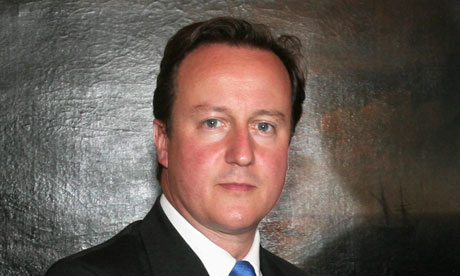
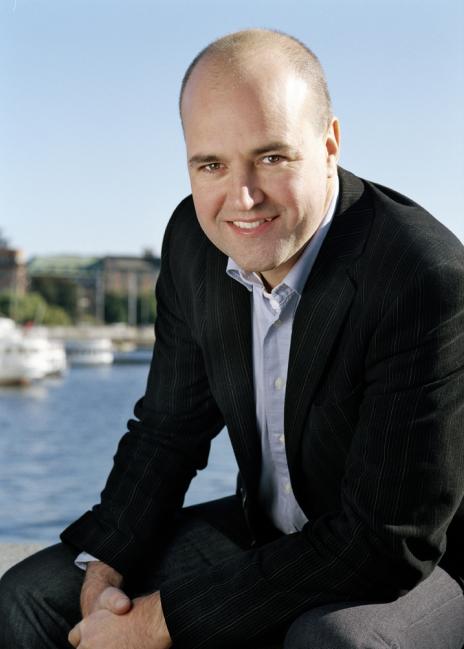
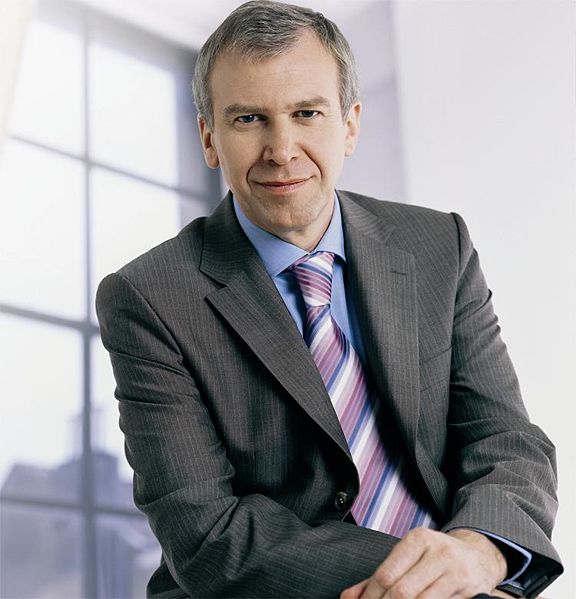
A little more than a year later, the new and bright faced Conservative Party Prime Minister, David Cameron, given the chance to revert the damage done, instead chose to stall his action, upholding the unimportant decision against Savage. Cameron, who has run from his election to the opposition leadership in December 2005 as a progressive liberal conservative, seems wrapped up in satisfying his extended political career as a caretaker leader in Westminster, and not risking his tenure with difficult choices as an executive. Much of the world has held high hopes for the new British head of state, yet Cameron's unwillingness to take up the helm of Churchill, Thatcher, and Blair is costing the country dearly. No matter his Conservative membership, Cameron has an intense desire to be a typical European everyman premier, attune to Yves Leterme of Belgium and Frederik Reinfeldt of Sweden. In these systems, the prime minister can change economic policies, yet social or legal elements remain largely untouched as the nation is preconditioned to stay fixed in government equilibriums for these issues near indefinitely.


Whether Blair, Brown, and Cameron realize or not, their governments are helping extremist Islam to gain more influence and control within Great Britain. Placing someone who disagrees with the religion on a list alongside murderers and Nazis is not prudent; it simply hands another victory to the adrenaline pumped hopes of the most disagreeable. Unless radical constitutional and legal reforms, couples with a new system of government are firmly adopted, the once great empire will be lost to a one time vote for the application of Sharia Law across the United Kingdom. The means for such a horrific bill are present, only requiring elected leaders to turn a blind eye to allow it through.  

Michael Veramendi

National Alliance Vice President for Foreign Issues

Wednesday, September 1, 2010

A New Direction

With all the tumultuous happenings of the 2010 election, it can often become difficult to decipher which candidates are after serving their constituents, and those who see a high salary and governmental power as more important. As an organization which advocates a new standard of rule in Washington, as well as the return of power to the masses, the National Alliance Party is not quick to simply go about handing down endorsements to partisan hopefuls in the forthcoming races without good reason or understanding of their views and plans to shape a stronger future for the United States of America.

All told, the National Alliance Party is choosing to step forward and support a fantastic candidate in the figure of Jaime Herrera, who has launched a vigorous effort to represent the people of  Washington State as the 3rd district representative to the People's House in our nation's capital. Despite facing a formidable foe in Democratic state representative Dennny Heck, Jaime has stuck to a positive message of job creation and work to help bolster small business across the 3rd district and the country.


After a life long commitment to public service, Herrera has become a staunch advocate for governmental reform,  with a comprehensive plan to enforce regulations and penalties against lawmakers and other Washington insiders who breach public trust during their careers. Her plan will not only help people to gain more trust and faith in government, but also set a high bar for the performance and service of congresspeople, ensuring that their hearts are set on being true stewards of the public's faith and voting ballots.


Beyond this, Jaime gives inspiration to women across America to stand up for positive, small government values, and avoid being sidelined in the political process. Electing her to the house will set a new modus operandi for elections and the process of Washington, refusing to permit the elite circles of power from festering and solidifying their control over whom is allowed entrance to lawmaking procedures and structures.

Washington desperately needs a new wave of leadership to cleanse its halls of the marred corruption which has permeated since January 2007, and Jaime Herrera is the ideal person to lead that very charge for the rights and sake of the American people.  

Cate Ashton

National Alliance Vice President for Operations