Pages

"A party for the future..."
Showing posts with label democrat. Show all posts

Saturday, April 9, 2011

Admirable Victory

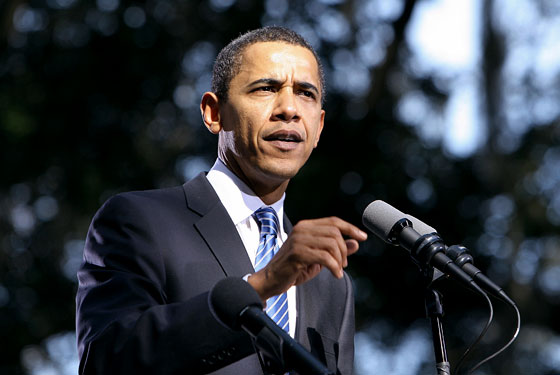
After hours of negotiations and rising concerns nationwide, the Congress and President Obama reached an agreement to seal off the threat from a federal shutdown by settling upon a $38.5 billion cut in domestic spending for the coming fiscal year. And even as the media attempted to set him up for a dramatic failure, House Speaker John Boehner successfully outmaneuvered the Democratic ranks to push through a bill with far more cuts than formerly accepted by the opposing party. While the cuts do not yet do enough for budgetary remedies, they are a symbolic triumph of reason over ideology which stand to crush Democratic hopes in the coming days to further crucify the GOP's image.


(Photo credit goes to Liberalland.com)

Now, it must remain clear that the government did not rule a shutdown out entirely; rather they simply extended the deadline with additional cuts. Although this may draw the ire of spectator Tea Party members, it should really be greeted with praise because it shows that once more the GOP can cleverly extort cuts from the Senate and Whitehouse without damaging its image during a shutdown.

Few things can be stressed as more important, seeing as the media and most Democrats would love to point fingers at Republicans for their failures, yet now the party has pulled off a successive win that forces the Democrats to continue on the tips of their toes in the coming weeks as negotiations continue. Boehner's leadership effectively prevented a Democratic propaganda war from striking home, all the while circumventing attempts to keep the GOP as a party of no compromise.

That stated, the battle does not end with this victory. Members of the GOP must press forward and implement further cuts so as to defeat additional Democratic roadblocks to governmental reform. By continuing with this pattern of evasive grants, the Center-right will be able to dismantle unnecessary federal institutions without negatively impacting the well-being of its political status or general image.

Further, the events of Friday shoved Harry Reid and Barack Obama back into the spotlight, where they will likely be forced to answer to the shortcomings of their party in recent years. While Boehner's leadership threw off the portrait of self-interest which has for too long hung over the GOP mantle, it also made Reid's opposition appear childish, and Obama's even less convincing. Observers should remember his sudden embrace of the plans, which came only days after he categorically failed to endorse significant budgetary cuts. The president flip flopped, and the nation is watching.

As with all other conflicts, the battle for American prosperity is far from over, yet the remaining elements in play promise a stronger showing from conservatives and patriots in the rounds to come. If the president refuses to cooperate once more, then the government will be shutdown, but only after proving that the Republicans are not the one so gunning for it. Friday night's struggle was the stepping stone to further skirmishes in the vicious confrontation for American freedom.


John Lai

National Alliance Treasurer and Comptroller General

Wednesday, February 23, 2011

A Democratic (Fascist) Party

(Ted Daniels is a good friend of the National Alliance research team, yet his views in this article are not necessarily those of the foundation. We sincerely appreciate his contribution however).

One has to admit; the Democratic-labor alliance is great at publicity, with recent protests managing to draw the attention of the doting news outlets and a massive movement in front of the Hall of States in Washington D.C. which demonstrated the full extent of the SEIU's ability to conjure up support against the movement to stabilize state budgets with generally moderate reform in collective bargaining rights and pension contributions. While their expertise with public relations is no doubt brilliant, the masses of signs painting Governor Scott Walker of Wisconsin as Adolf Hitler seem ironic considering how in-step their activism is with he former Nazi leader's governmental system.


(Photo credit goes to Life.com)

As the nation now better understands, 14 Democratic senators from Wisconsin chose to leave the state in order to prevent quorum for the passage of a union reform bill aimed at cutting down the 3 billion dollar shortfall which the former governor of their own partner left when his term expired last month. According to the Democrats, these childish actions represent a stand for Wisconsin families and worker's rights, but their argument misses a critical point: it bashes democracy.

Perhaps we have become all too accustomed to politicians breaking their promises, yet Governor Walker is an example of a man striving to maintain his commitment. Last fall he won a simple majority with 52% of the vote, promising throughout the campaign to implement the standing reform, and the voters of the state agreed. Walker, who has been mocked for not completing college due to family ties is simply keeping his promise, no matter the obvious negatives it holds for him politically.

Wisconsin budget proposals reveal senator salaries of just below $50,000 annually, hardly a pittance compared to the pro bono status of legislators in neighboring provinces, yet the Democrats still feel justified in hiding out in Illinois to prevent the vote--all while taking in the lucrative aforementioned funds. At the very least, they should relinquish their salaries or resign the senate; holding back simply roles them into our next category: haters of democracy.

Republicans did not always agree with the Democrats during the tenure of Governor Jim Doyle and his bicameral majorities, yet never once did they prevent quorum from materializing, as this directly contradicts democracy. When dictators come to power, they silence the voices of those who oppose them and rule without limitations. Although the leftists may feel a tingle of glee at the thought of bolstering union power, their backing of these fleeing public servants is an endorsement of arbitrary rule by one voice rather than through the forces of transparency and open debate. In leaving their responsibilities out of disagreement, the party is preventing the minority's voice from being heard and simultaneously promoting a fascist state without good cause. Their responsibility as elected leaders is to represent the smaller group in the capitol, not leave them without voice due to interest group concerns.

Regardless of how the leftist machine may whitewash these protests by the officials, the Democratic Party and gone too far in it supporting the undermining of hundreds of years of American democracy. These are actions similar to those by men who shake the fascistic flag, hoping to silence any view or dissidence which is not in line with their own beliefs. As liberals and conservatives, it is up to us as Americans who love freedom to reject this political perversion before it manifests in higher chambers of power.


Ted Daniels

Writer, Movement for American Federalism Blog  

Monday, September 20, 2010

A Moral Triumph

Victories are never built on shoddy beliefs; the illusion of one simply precedes a coming fall. Truthfully, there are few other ways in which to discuss the results of Sweden's dynamic national election only a day in the past, in which Prime Minister Fredrik Reinfeldt lost much of his seemingly enduring "grand coalition" to the right-wing Swedish Democrats Party. Not only should this election be looked at as a referendum on the decay of the European Union to centralized government and radicalized religion, but it also represents a profound dispersion of the once consolidated influence of the probuconservatives, a group of economic liberals and otherwise moderate politicians who have risen to prominence in recent European political history.


Reinfeldt's personal career is a prime example of the growing shift towards liberal conservatism in the Old World nations. After spending some time as an ardent supporter of Swedish Prime Minister Carld Bildt in the 1990s, the young and ambitious activist began challenging his superior's views as too extreme and incompatible, campaigning against the man whom he had helped to enthrone and assisting in the dramatic victory for the leftist Social Democrats in the 1994 general election campaign.  

With Bildt and the conservatives humiliated, Reinfeldt amassed his party of support, working to construct a moderate platform under which to unite for his election to the opposition in 2002, and the premiership in 2006. Since his victory, the prime minister has gained ample praise for his fragilely strung together Alliance for Sweden, which was meant to coast to an easy victory in the 2010 election. With his success, Reinfeldt even managed to shift David Cameron from a strong conservative to a flamboyant liberal in time for an expected landslide victory for the United Kingdom Conservative Party in the May 2010 decision moment. 

And yet, something has held both Cameron, who now governs with the Liberal Democrats, and Reinfeldt, who enjoys centrist and left-wing support in his coalition, back. The short of it is simply morality. Both men have arguably captured impressive victories politically, but their seemingly unfaltering strides in that arena still cannot endear them enough within their separate electorates to form a lasting dominance over the nation. 


Notwithstanding their efforts, probuconservatives feel that by simply cutting taxes or agencies domestically, they can command the everlasting partnership of the voters. Though economic policy is important, it is a useless goal if the party does not provide contrast to the failings of the countless left-wing governments around the globe. Conservatives may not inhabit government as frequently, yet they are called in to reform and rebuild the positive ways of the nation's elder days through good intended social proposals and economic openness to help businesses grow. 

If the probuconservatives feel their moderate path is still righteous after their ideology's defeat in the Netherlands, Britain, and now Sweden, then they are missing the reality which faces them unabashedly. Voters want strong conservative leadership in times of crisis; they will throw out those who are simply seeking to achieve goals politically. And although moderate leaders may win races, their reliance on centrist rehtoric can only lead to eventual defeat, as they hand the reins to a more strident partisan months before the next election. These politicians desire self-fulfillment at the expense of the people they claim to represent. In their quests to forge dynasties, they have left the interests of the people behind, choosing to serve only themselves. 

Michael Veramendi

Vice President for Foreign Issues

Wednesday, September 15, 2010

Believing in the Future

Perhaps there has never been an organization of political interest that has fallen so hard in agonizing defeat as the GOP establishment did in yesterday's Delaware and New York primaries. For the purpose of being direct, I will pass over the New York results for this article, and instead focus on the ruthless results of the First State, and how they relate to the climate of the nation.

Notwithstanding partisan views, any American with a generally impartial attitude could fully appreciate the incredibly poor sportsmanship and ungracious attitude of Congressman Michael Castle as he delivered his concession speech on Tuesday night. The brief and clearly rushed statement, which mostly worked in a self serving manner to promote the liberal Republican for his work over the past 40 years failed to mention the name of victorious nominee Christine O'Donnell, despite Castle's supposed honor and respect in politics. It could be that facing a 6% point loss was just too much for the old moderate to take, yet his less than cordial response to the people's decision is still inexcusable.


Before facing the voters, Castle attempted to simply run a popularity campaign, slinging mud in secrecy at O'Donnell only after her own organization received a boost from the activist Tea Party Express. According to his campaign, Castle's young opponent was both a con artist and a fraud, a person incapable of paying her bills and with views far outside the centrist path of Delaware's political history. And now, his career finally ended, the Congressman only helps spread the fire by refusing to endorse O'Donnell's victorious campaign.

It might be true that sometimes politics get out of hand, but failing to help one's own party in a critical year because of a humiliating defeat is unbecoming of good public servants. More so, its is a simple reflection on the type of man Michael Castle is: a disconnected, self-interested opportunist. His career certainly stretched long and far, from service in the state house, to governor, and finally to the representative seat, which he has held for almost eighteen years. Truth be told, he had ample attempts to run for the Senate--perhaps even the presidency, but turned them down for the sake of political expediency and comfort. Assuming Castle would only run as a governor or congressman, he might have tried to take Delaware's upper house seat in 1990, 1996, 2000, 2002, 2006, or 2008, yet he stood aside out of respect for Joe Biden. Only once the playing field was absolutely leveled did Castle wade into the possibility of becoming a United States Senator, and his campaign still failed to reach out to the common voters, instead clinging to his poor political credentials like a dog to a thrown out bone.

Regardless of Castle's behavior however, it is time for America to embrace the prospect of Christine O'Donnell as the next United States Senator from the State of Delaware. Not only has she stood up consistently for American values, but her platform is also in line with much of Delaware's population, which according to Gallup Polling dissents from the healthcare package, tax increases, and even elements of cap and trade.


Even beyond the obvious, it is entirely possible for O'Donnell to route Democrat Chris Coons come November, especially if Republican forces fall behind her campaign and promote a positive, small business message to the voters. As an insurgent conservative in a liberal state, O'Donnell is the test of Republican traction with even more moderate voters for the election in 2012. If cards are played correctly, she can win, and even by a respectable margin.

It is important to remember two major elements to this possibility. First, O'Donnell has run two state wide campaigns, the latter in 2008, when she captured 35% of the popular vote, despite running against a vice presidential nominee and having only $100,000 for the effort. Now she stands able to beat the opposition with both the absence of the Biden name, and his candidacy for the vice executive post.

For all that is claimed and advertised, Chris Coons is not a very impressive candidate, having served as a county executive for only five years, and prior to that possessing little national experience with a federal campaign. In fact, despite his seemingly impressive array of degrees from Amherst and Yale, Coons is employing tactics rather under handed for such a proposed intellectual. His movement recently listed O'Donnell as being bizarre and out of touch, even going so far as to imply she might be mentally delusional.


Victory in 2010 is about values, not convenience. Michael Castle would have represented everything wrong with our system: the status quo, establishment picks, and little change in government. Yet Christine O'Donnell has the capacity to change what is wrong in our nation and create a new future of prosperity for us all. Were the National Alliance Party to field a candidate in a race such as this, they would embody the same qualities as Miss O'Donnell, and thus she receives our utterly complete support and encouragement. To change Washington, we must change the process, and as a senator she will be part of that revelatory shift in policy.


Cate Ashton

National Alliance Vice President for Operations

Friday, September 10, 2010

Economic Mayhem: Part II

In recent hours, the Obama Administration announced its plans for a new fiscal blitz against the wavering economy with a carefully labeled "economic plan." Quick to respond after reporters attempted to place the new attempt into the same category as the Administration's earlier stimulus package, the President furiously insisted on giving it the precautionary tag of the aforementioned plan, hoping to avoid a parallel comparison with his all but universally loathed  "cures" for our nation's monetary and fiscal problems.

Whether Barack Obama employs more rhetoric or even none at really is irrelevant at the point in history, and will not truly help us save us from the pitfall of an extended or double dipped recession within our economy. It is not that any members of the current majority government honestly feel or can prove the future benefits of the first and now proposed second stimulus; rather, they know the prior attempt was all a worthless facade, and the second will mirror its same classifications.


No, the Administration and the Congress is tying everything to the hated word of Capitol Hill, the binding fragment that should not inhabit the minds of our leaders as they make decisions,l yet is all too present in our present state of governance: political ideology. Even in its most mild form, the sensation has so passionately seized hold of the Democratic Party and the President that it now threatens to become the key ticket to both of their downfalls in this fresh decade.

What must be understood in explaining this is that the top dogs of the Democratic Leadership, most notably Nancy Pelosi and Charles Schumer, ran in 2006 and 2008 not with a European-style social democratic platform, but with a more moderate, fix Washington strategy. Americans were less appreciative of the Democrats than simply angry at the Republicans, and without too much difficulty, the center-leftist party coasted to an admirable victory, capturing both houses and inflicting several humiliating defeats on the incumbent Republicans. Two years later in 2008, the Democrats tried to play the same card, interrupted only by the presence of a somewhat annoying presidential candidate who was convinced that mass appeal was his ticket to the Whitehouse. He went from closing Guantanamo Bay, to fixing the economy, to trying terrorists in America,  with a touch of everything to please the unsatisfiable populace, and came out on top.


Now President Obama and his party's leaders are struggling to cover for the unrealistic policies which he foolishly proposed in order to win the 2008 election. After all the fundraising and claims of future prosperity, his government is boiling down to an atrocious mix of braggart ways and projected, not sincere, leadership.

With his latest gambit being a second stimulus package, even the President knows his plans will not work, but he is fixated about the historical view of his ideology. Did he stick his guns as a social democrat, or dispel Keynesian philosophy for fundamentalist common sense? Truth unveiled, Barack Obama cannot stand the notion of his ideology being publicly versed as ineffective a wrong. His type of persona will always object, arguing long after his presidency that "too much obstructionism was involved," and that "the time was not right" for his plans to reach positive fruition.

Despite the endless sentences of jargon we will be forced to endure both in defense of this new package and afterwards, good men must push on for beneficial additions to help the economy. As the National Alliance Foundation has made clear, the key to recovery is not in more government, or in breaks only for corporations, but in the restarting of the small business community to provide jobs and opportunity to the commonwealth. Entrepreneurs, armed with a restructured policy that aims to eliminate business income tax and hands out credits for companies who invest in domestically produced products will boost our state of fiscal stability to a healthy zone of general success in the near future.


If President Obama desires to mend his image with the voters, then he must shift his range of vision to focus on helping businesses survive, not in paying off union members with large checks from the taxpayer's pocket. In fact, it would be far wiser to simply give the money to businesses through loans and to state and local governments. Federal programs are known for their ineptitude and poor results, verse the wiser actions of councilors and delegates closer to the public.

Our recovery from this recession will not come from the government; it shall be made up of the efforts and bravery of the small business community, which is the heart and soul of the American People.

John Lai

National Alliance Treasurer and Comptroller General

Saturday, September 4, 2010

Reasonable Appreciation

I think it's best to begin this piece by making a rather obvious distinction: the National Alliance Party shares close to zero sympathies to the political positions of activist and former Green Party presidential nominee Ralph Nader. When one examines even the general viewpoints of Mr. Nader, they are clearly way out of line with both the American way of life, and the concerns of most of the mainstream population. But while that may be true, I feel inclined as a member of this organization to reach out and show him the respect garnered by even the wisest who promote values similar to those of our viewpoint. 


Despite being considered irrelevant by both parties at the onset of the 2000 Presidential election, Nader ascended to a position of the so called "spoiler," after his campaign for chief executive gathered an impressive 2.74% of the popular votes. Since the man's campaign received such a large number of its ballots from the State of Florida, Democratic strategists have since contended that his presence on the voting papers cost Vice President Al Gore the general election.  

I feel this is unfair on many accounts, and simply surmises to a juvenile sore loser attitude from the DNC, which could not even take the presidency from George W. Bush in 2004, despite their tremendous advantage, and Nader's far lesser portion of the votes. These can briefly be covered by including Gore's weak campaign, the presidential debates commission, and Nader's own message for the year 2000. 


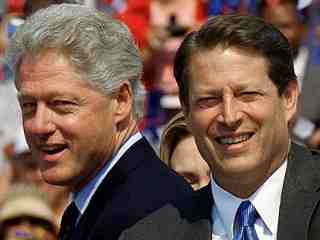
Perhaps in an admirable attempt to avoid the "no clear definition" characteristic given to former President George H.W. Bush after the Republican's copying of Ronald Reagan's image to win in 1988, Al Gore distanced himself, rather disastrously, from Bill Clinton's administration of America. Considering the Arkansas Democrat's tendency to present a record of messy and unsettling personal relationships, as well as the South's aversion to such public behavior, this might actually be viewed as wise, accept for the fact that the Vice President's alternative was nothing short of weak and ineffective. 


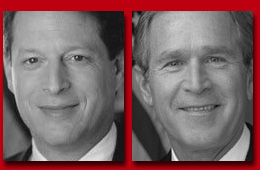
And so Al Gore became the paladin for environmental protection in the United States, leaving behind the strongest issue for his candidacy in that year: the 3 trillion dollar surplus left by Bill Clinton. The merits of the money reserves can be debated, but no matter what is said, it made a terrific ploy for a strong and difficult to beat campaign. Instead, Donna Brazile, Gore's manager, allowed him to pursue a reckless and shoddy plan which was doomed to fail against the charismatic pro-tax cuts Texas governor, George W. Bush. Fused together, the following ad reveals just how out of touch Gore's message felt to a public in which less than 10% today feel protecting the planet is an important issue (Gallup Poll). 


As the election came around to presidential debates, little action was taken by the Democratic Party to help include Mr. Nader, despite his insurgent strength in choice polls and in battleground states. Not surprisingly, the commission for debates, controlled by both former party chairs of the two major electoral factions and a large number of corporations, refused to allow Ralph Nader to attend any of their three sessions, and even went as far as to deny him a seat despite his registered invitation and ticket for attendance. According to commission rules, candidates must poll at least 5% in several national questionnaires before being admitted, and Nader did not qualify with enough support. In minced terms, he was not relevant to the equation--accept that he became very relevant as soon as his movement hurt the Democrats. 

Ever since Al Gore conceded the race to George W. Bush, the Democratic Party has attempted to slander the man for his hopeful candidacy, absolutely avoiding how his message drew members of all parties and ideologies to cast their ballots for him in 2000. As noted before, Nader's views can seem ridiculous at some corners, yet his message for the turn of the century was to forge a strong alliance between the people and honest businesspeople in America. The Democrats failed to deliver their historical populist message, and neglected to use the strongest element of advantage: the Clinton surplus. What should have been an easy victory turned into a milestone of defeat as the party scrambled to realign, and failed again, in 2004. 

Ralph Nader may never become president, nor should anyone hope he does, yet the man deserves our respect and consideration. Standing firm against two of the largest and most powerful parties in the United States is not cakewalk; it requires tenacity and an iron resilience against the opposition. For all his work, Ralph Nader has seen even his closest friends betray him for the Democratic Party, yet a stronger force is allied with him: countless Americans who desire fundamental change in the system of government. 

David Marino

National Alliance Vice President for Campaigns