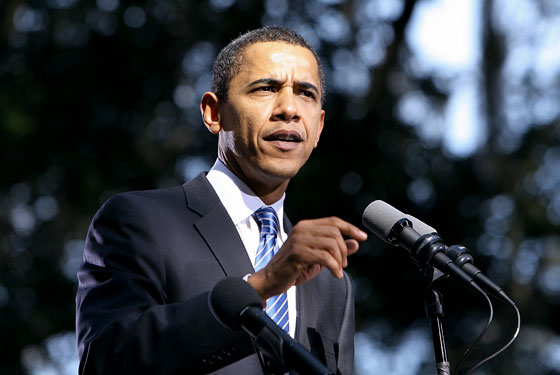
In spite of the excited spitfiring from conservative talking heads and rising presidential hopefuls, the actual possibility of a Republican defeating Barack Obama is steadily shrinking as a convergence of policy and general idiocy wreck what might otherwise have been a democratic coup to be remembered for generations in November of next year. Over a matter of months the president has been luckily transformed from floundering politico to confident executive due to a stream of repetitive mishaps formated by the lingering gunners for the American Presidency.
(Photo credit goes to Dangle the Carrot blog)
Conspiracy and Consequence:
For the last three years, the GOP and its support bases have been playing with a deadly fire by repeatedly implying the president was not born in America and may even be a radicalized Muslim. Cute as these attacks might seem at their first release, using one method without a firm policy balance can inadvertently bring about electoral destruction, as the party witnessed following the 1998 impeachment proceedings against Bill Clinton.
Leaders from Michele Bachmann to the not-so-right-wing Glenn Beck continue flashing the point for political prime time and monetary gain, leading the press to associate them with mainstream voters of the GOP--a terrible frontal appearance by all means. This sort of behavior has its limitations, and in a national campaign it will only serve to cripple the Republican standard bearer by forcing them to answer questions regarding the party rather than focusing on good recovery polices.
Alienating the New Majority:
Mostly attributed to the media's hateful reporting, but equally due to GOP meanderings, Hispanics now almost categorically oppose the party and its candidates. Perhaps this is only a byproduct of tough immigration positions by its elected candidates, but the visceral rhetoric of top leaders has done nothing to mend ties, and so it faces a critical risk in gaining wide demographic support.
The Anti-Semites:
True, this is a heavy charge to weigh, yet the fringe positions of both potential candidates in Ron Paul and his son Rand as well as Gary Johnson provide visible images of figures who could further handicap a GOP thrust towards victory. Both Pauls constantly speak out against funding to the State of Israel, regardless of the massive threat posed to the country from terrorism should they loose American aid.
This is not to imply that the Center-right is doomed to fail, but drastic changes must be made if their is hope of silencing Barack Obama's surge to historical prominence with a second term. As we well know, notwithstanding his performance in a second four year period, the sole fact of a reelection mandate would render him a spot in the great presidents category by the zealous authors of professorial Marxism in America today. If Obama is to be stopped, it will require skill and temerity, two factors the GOP still severely lacks as of recent days.
"If men of this century understood the value of common ground, they might forge heroic legacies rather than dastardly remembrances during their time on this good earth."
Years ago, as the young men of America donned uniforms and departed for the beaches of Normandy and Iwo Jima, they were backed by those of diverse colors, both in political beliefs and backgrounds. From the poor farm boy to some of the most elite congressmen, hundreds of thousands of troops bid farewell, encouraged by spectators in full support--and opposition, to the great war of the century. Even among the most pacifist of journalists there remained an understanding that shoddy or not supportive reporting might cause irreparable danger to the mission, and to the lives of soldiers serving in the front. One might look to it as a universal mentality; that war was painful, yet its burdens and sacrifices had to be carried and made together.
Today, the world seems to have forgotten these olden concessions of passion. WikiLeaks, a website pledging transparency and openness, has unleashed a remarkable number of documents regarding details of the Middle Eastern wars, placing thousands of lives across the world in immediate jeopardy. According to the site's founder, Julian Assange, the documents represent the uncovering of crimes against humanity by governments involved in the conflict, yet he fails to understand the depth of the issue at stake. For men like Assange, life is all about the one moment of success and limelight--not the aftereffects on innocent lives. Like Phillip Agee, who released confidential information that led to the assassinations of countless undercover agents, Assange believes the means justifier the ends. Secrets spilled are all that matter--even if their consequences are earth-shattering.
But furthermore Assange's action highlight a sad reality of a world in which views and ideological stances have overpowered common sense and general worldwide unity. In the past years in America, it might be prudent to realize how far and widespread this condition is. Democrats did not simply disagree with President Bush; they truly wanted his administration to collapse and fail, with international courts indicting each member possible with war crimes and humiliating the country of which all parties share. Under Barack Obama's tenure, the dialog has hardly changed, with his detractors picking at anything possible to call for impeachment or eventual failure.
All else aside, it paints a sad yet enlightened picture of what the world has become, and what it will likely be forever: an arena where only the strong, regardless of their motives, shall continue to outlive and outperform those around them. Of course competition is not wrong, but if its ends are such travesties--as Mr. Assange's will cost countless lives, the final ultimatum is one in which morality has been murdered in cold blood.
Those brave men and women currently serving are the last hope of the world to overcome evil and defeat the ill-doers residing within it, yet they will only be capable of succeeding if their positions and defenses are not compromised for the sake of ideological reveling or projection into the spotlight. For too long in the past 50 years this has become the operating procedure of so many, and its results are to gruesome and countless to recount in full. Unless the world--people of different views and ideologies alike, are able to overcome this incessant desire to betray the good cause for the sake of personal fame, we will spiral into a degenerated pit of nothingness in which morality is gone.
As much as he would probably hate to admit it, Barack Obama could learn a thing or two about public relations from none other than his love-to-hate predecessor, George W. Bush. Through all of his mistakes, gaffes, and embarrassments, the former president demonstrated a considerable calm demeanor, shrugging the dust off and in a way, staying above the chaos of partisanship. With dangerously fluctuating approval ratings and a soured market which shows little interest in recovery, the current president runs the risk of defeat if he maintains the appearance of elitist ignorance towards the problems facing average Americans.
Pundits dating back to the early stages of the 2008 campaign lavished then Senator Obama with the shining "New Clinton" title, hoping to pull off a dramatic 1992 repetition defeat of the GOP establishment with a massive conservative/moderate coalition in the Democratic camp. For all intents in purposes, the candidate's speeches, which went from buoyantly liberal in 2007 to remarkably right of center in Fall 2008, carried that message home, sending keeping John McCain in Arizona with a modest enough 53% of the national popular vote. To the media, it was over, with the new charismatic democrat in power and a flimsy Republican ramshackle to stand against him. Except...there was a unique difference.
Unlike Bill Clinton, Barack Obama was no poor Southern boy with a small town charisma to sweep the nation; his career was built on community organizing, particularly with a strong black constituency base in northern Illinois, as well as considerable union money. Obama had never stood against the tide in a state with unfriendly colors; reaching the senate with a jaw dropping 70% of the total vote--and against a carpet bagger radical too. He may have gone to Harvard Law School, but his parents' achievement of PhD's hardly gives him much credit for his knowledge, which was passed on by his considerably intelligent father, Barack Obama Sr. Clinton's own paternal figure, a drunkard and violent man, offered little to help his son graduate Georgetown, Oxford, and then Yale Law School.
So when Barack Obama railed about "no tax increases," and "a strong small business economy," he bought the hearts of the people long enough to win election--and now that energy is vanishing. In the face of crisis, the president appears as if he must be reminded of the plight of the people, evidences in his haughty and long-delayed assumption of responsibility for the disaster cleanup in the Gulf of Mexico.
It is not to say that he has not been speaking out; only that his words are lost to the masses who desire straight talk and a charismatic interpersonal honesty--both elements of the Bush and Clinton style. To the average American his speeches are adept for sure, but they lack the genuine acceptance of everyone to resonate with the majority of the public. Even within his own writings, the president is remarkably syrupy with his words, weaving every sentence into idealistic matrimony between verbs and paragraph breaks that seem anxious to prove the worth of his terrific education--and still come off as out of touch with the common man. If the commander in chief were to alter his rhetoric, tossing in a gaffe or two in balance with his theatrical command of English, he might manage to dissuade a public which now more than ever appears intent on throwing him out of office in 2012.
Contrary to what the president might have viewed it as in the days leading up to his election, the Oval Office is not, and will never be, an office meant for the most elite. The Senate, filled with millionaires and the most skilled at the political game is the place for those persons in political society. Though once in a while they may reach its hallowed frame, their ultimatum will approach soon if they fail to shake the heavy dust of self-appreciation from their suits and move forward for the people. Barack Obama now has 2 years to make this change--or perhaps he will be changing residency.
The tidal wave is certainly subsiding, yet within its wake is a call not to sit back in temerity, but rather to step up and challenge the issues which we so desperately need to overcome in these next two years. After four years of painful eradication at the ballot box, the Republicans have returned to Capitol Hill in full force, led by a stronger grassroots effort than ever seen before, and a mandate to deliver fundamental changes to government. As the National Alliance Foundation made clear in an earlier piece, this must be a time for the GOP to truly work and complete its promises to the public. Winning a race is one thing, yet following through on campaign promises is another entirely, and this is the test of the Republican mettle for 2011.
In almost a saddening way, the Democrats have fallen prey to the mistakes of poor judgement, and they arrive at Congress in January lacking senior giants such as Ike Skelton, Jim Oberstar, Allen Boyd, and even Rick Boucher, who could not survive the swarm of opposition in rural southern Virginia. This leaves the Democrats with less senior members, and a reminder of how governmental folly punishes the arrogant of the mob with minority status. The House is gone, solidly rocked to the other side with a sixty vote swing, though some still believe it may go as high as seventy over the next few days.
Although the Senate was easier for the Democratic Party to survive in, their proximity to defeat in a number of races should also serve as something of a message of 2012 and their electoral hopes in that great contest. In the state of Washington, upstart Dino Rossi looks likely to lose, yet only by less than 1%, a sure sign of danger in the traditionally blue state which Barack Obama cruised to victory in during 2008. Michael Bennett may fend off Ken Buck, but only by a mere point as well, putting that state's loyalty in question for the president's reelection. Obviously the firmest results for the left were in Nevada, where Harry Reid survived the coup to remove him from power, and California, where Barbara Boxer crushed challenger Carly Fiorina by more than 600,000 votes.
Possibly a larger problem for the DNC to mull over now is the simple dilemma of state gubernatorial races, which seem destined to hand bellwether states to the GOP, swapping out only a choice few solid blue provinces of California and New York with confident liberals. Ohio will now have a Republican governor, as will likely Florida and Michigan, all key states for both redistricting and the next presidential contest. Even true blue Oregon, which has not elected a Republican for decades, seems destined to fall out of the center-left's hands as Chris Dudley leads his Democratic opponent.
As if the fall of the giants was not enough, countless freshmen Democrats have been soundly routed, most notably with the case of liberal bastion and take-no-prisoners Alan Grayson, whose distasteful ads landed him a double digit silencing as Republican Daniel Webster annihilated his chances at reelection.
Refuting claims of anti-minority standing, the GOP elected a number of African Americans, most notably Allen West in Florida and Tim Scott in South Carolina. And in statewide contests, Marco Rubio pummeled independent Charlie Crist and Democrat Kendrick Meek, followed by Susana Martinez's defeating Diane Denish, adding more Hispanics to the national Republican caucus. In short, the mirage of the DNC serving as some welcoming all party was shattered as voters turned to real leadership, not talking points.
While these are all causes for celebration, they must serve as a warning to the GOP to not repeat the disaster of 1995, which was simply a smearing of President Bill Clinton. Indeed, Mitch McConnell's unwise quip that the GOP's focus is only unseating Barack Obama was hardly prudent, and should disqualify him from the leadership post. This Congress needs to represent action, not political gains. Republicans have a duty to build reasons for their taking of the executive branch in 2012, not simply a platform. That is the test of leadership for the GOP for the next two years in the lower house majority.
According to the most recent election polling by Gallup, the GOP holds a strong 9-point lead over the Democratic Party for the 2010 election. And while DNC chair Tim Kaine has been feigning victory over the past several days, it has become obvious among Democrats that their hopes of commanding the House of Representatives are all but lost as nearly one hundred seats are in place for a party switch this year. Not surprisingly, most Republicans are already fantasizing about their return to power in the lower house, yet something must remain constant even as they accept the laurels of confirmed triumph: their commitment to the American People.
In 1995, a giddy conservative majority led by Newt Gingrich took the oath of office, coming to power with a supposed dedication to the country through their Contract with America, a multiple bulleted document that promised among many things, to abolish the Department of Education and privatize part of the American social security system. Regardless of their signing however, most of the Republicans turned back on their promises, quickly becoming a corrupted party of age which led them to a humiliating defeat in 2006, and a supplemental version of the same in 2008.
Last month, the Republicans unveiled their 2010 “Pledge to America,” which is arguably more modest than its counterpart of 1994, yet still does take some braver steps towards cutting the budget deficit, albeit very slightly. What’s more important than this however is that the GOP follows through with their promises of fiscal conservatism, including not creating more federal agencies to balance out the 100 billion which they have committed to eliminate from the spending projections.
Furthermore, Republicans must act to give a new agenda to America to contrast that of Barack Obama, who obviously remains in the Whitehouse at least until 2013. Simply complaining about his policies will quickly sink the conservatives into a mire of defeat in the 2012 presidential race, much like William Clinton trounced the opposition nominee in 1996, despite a Republican -controlled House and Senate. This means looking at ways to solve the problem of social security, cutting large amounts of government waste, and potentially passing a resolution to limit the mandate of the Department of Homeland Security to no more than ten years. The latter has simply become a convenient way for less than qualified college graduates to get jobs which do not generally contribute to the nation’s security—and instead limit its financial stability.
But finally, the issue comes down to how firm the GOP intends to be on ethics and governmental integrity. It truly has become too easy, under the former GOP majority and now beneath the Democrats, for lobbyists and financial institutions to grab hold of the collar of most representatives, forcing them to obey or forfeit considerable campaign funds with their denial. Republicans have a duty to either stand up against this corruption, or stand down in defeat at the ballot box.
The next two years, more likely than not under a lower house GOP leadership, must include a majority part which does not falter or grow weak to the pressure of the lobbyists. Conservatives need to preserve truth and honor in Washington, starting with their own party.
Thank God in heaven for the Constitution: it's exactly what I think with each passing day leading up to the midterm elections of 2010. As if still playing the establishment outsider card, the Obama Administration has come out with a strong criticism of the Karl Rove sponsored American Crossroads PAC, as well as its friendly ally, the Chamber of Commerce, claiming both groups are being funded by foreign entities, which is by most descriptions completely illegal in the United States.
Despite the president's complaints, the group is picking up steam, and apparently broke fundraising records during the first week of October, as reported by the Washington Post in the article here. I am entirely sure Barack Obama respects the Constitution, but he seems to have forgotten one of its primary tenets in launching this broadside in a bad political year for the Democrats: the 1st Amendment. As it reads, "Congress shall make no law respecting an establishment of religion, or prohibiting the free exercise thereof; or abridging the freedom of speech, or of the press; or the right of the people peaceably to assemble, and to petition the Government for a redress of grievances."
Plain as can be, the Constitution dictates that people and organizations of individuals (corporations and PACs), may have their own say in each election campaign. Trying to remove that right is not only in violation of our founding document; it also casts a poor light on President Obama, who won the 2008 election through unprecedented fundraising, much of which was collected from foreign sources.
For the Democrats, it must hurt to read those words now that they occupy the halls of the Whitehouse, as the text makes almost each of their arguments against the action committees nulled. But for those who might remain convinced that these conservative friendly blocs are only used by the GOP, I urge consideration of the many 527 groups and PACs which helped swing the House, and more importantly, the Senate, to the donkey party in 2006. Back then, the Democrats were certainly quick to emblazon themselves with the banner of the union, decrying the supposed tightening of regulations surrounding free speech by the Bush Administration. Now, the tuning of their political radars is changing, and thus the unfairness to incumbents role is their own to play in.
Maybe I am wrong, but it almost seems as if the Democratic Party cannot stand to lose, no matter the risks or costs of winning. In 2008, despite a strong outsider advantage, they reverted to voter fraud and international fundraising to ensure a presidential victory and supplemental wins in Congress, and many of their most high-profile senators and congressman are simply bowing out rather than facing the voters come election day. In previous years which held likely negatives for the current minority party, incumbents stuck it out to the end, accepting defeat rather than attempting to retire under the guise of humble public service.
As time goes on, Congress and the Whitehouse will change parties, yet the Constitution must remain the trustee of both power brokers, ever strengthened and never adjusted so as to diminish personal rights. Only in maintaining such a policy for the nation can we continue to endure as the last great symbol of world freedom and unparalleled democracy.
Andrew Rimmer
National Alliance Vice President for Communications
In the United States of America, citizens are all too familiar with the two sided economic stances of the major parties, with labor unions and the public sector the favored child of the left, and corporations the darling of the right. And still, after nearly five decades of these policies, there still has yet to be a government which champions the valid proposal of a universal and flat tax, which the National Alliance Foundation firmly believes in.
Feeding the corporations might create a meager sum of jobs in the nation, but it scarcely assembles enough to add a large period of economic plenty to the national markets, thus staying the country in a limbo of inaction and uncertainty. And while jobs within the public realm seem worthwhile in the short run, they have a tendency of damaging the economy further as taxes are drawn from the people to provide for their salaries.
Possibly the most positive element to a flattened tax system would be the removal of the lower income individuals almost completely from the tax brackets in America. Because a universal rate would remove the proportional differences from the amount of tax levied on different income levels, poor and lower middle class would no longer have major stake in tax levels, adding to their overall financial security.
For larger income drawers, the system would help by leaving them with more funds to lend and invest in the markets, benefiting the middle class college graduates and small business owners who are trying to hold unto their personal share of success in the capitalist pool. In a day and age when our largest obstacle to more prosperity is the unwillingness of financial institutions and wealthy citizens to make secure loans to the younger generations, the economy needs a stimulant to help its markets rejuvenate its statistical potency.
Already in several other countries, including the power-brokering state of Russia, flat tax rates have worked tremendously, dragging the nation from a near dead zone at the start of Boris Yeltsin's presidency to yearly growth of 9.5% in 2009. With similar growth in the United States of America, businesses would begin lending and purchasing inventory much faster, pushing the markets out of the recessions abyss and into a more stable, job friendly economy.
Showing this sort of leadership might be difficult for the dusty halls of Congress, yet it is the precise remedy to our slowing national economy. No longer should the capitol act on ideology; it must move to save the futures of Americans in this generation and the next.
Andrew Rimmer
National Alliance Vice President for Communications
In recent hours, the Obama Administration announced its plans for a new fiscal blitz against the wavering economy with a carefully labeled "economic plan." Quick to respond after reporters attempted to place the new attempt into the same category as the Administration's earlier stimulus package, the President furiously insisted on giving it the precautionary tag of the aforementioned plan, hoping to avoid a parallel comparison with his all but universally loathed "cures" for our nation's monetary and fiscal problems.
Whether Barack Obama employs more rhetoric or even none at really is irrelevant at the point in history, and will not truly help us save us from the pitfall of an extended or double dipped recession within our economy. It is not that any members of the current majority government honestly feel or can prove the future benefits of the first and now proposed second stimulus; rather, they know the prior attempt was all a worthless facade, and the second will mirror its same classifications.
No, the Administration and the Congress is tying everything to the hated word of Capitol Hill, the binding fragment that should not inhabit the minds of our leaders as they make decisions,l yet is all too present in our present state of governance: political ideology. Even in its most mild form, the sensation has so passionately seized hold of the Democratic Party and the President that it now threatens to become the key ticket to both of their downfalls in this fresh decade.
What must be understood in explaining this is that the top dogs of the Democratic Leadership, most notably Nancy Pelosi and Charles Schumer, ran in 2006 and 2008 not with a European-style social democratic platform, but with a more moderate, fix Washington strategy. Americans were less appreciative of the Democrats than simply angry at the Republicans, and without too much difficulty, the center-leftist party coasted to an admirable victory, capturing both houses and inflicting several humiliating defeats on the incumbent Republicans. Two years later in 2008, the Democrats tried to play the same card, interrupted only by the presence of a somewhat annoying presidential candidate who was convinced that mass appeal was his ticket to the Whitehouse. He went from closing Guantanamo Bay, to fixing the economy, to trying terrorists in America, with a touch of everything to please the unsatisfiable populace, and came out on top.
Now President Obama and his party's leaders are struggling to cover for the unrealistic policies which he foolishly proposed in order to win the 2008 election. After all the fundraising and claims of future prosperity, his government is boiling down to an atrocious mix of braggart ways and projected, not sincere, leadership.
With his latest gambit being a second stimulus package, even the President knows his plans will not work, but he is fixated about the historical view of his ideology. Did he stick his guns as a social democrat, or dispel Keynesian philosophy for fundamentalist common sense? Truth unveiled, Barack Obama cannot stand the notion of his ideology being publicly versed as ineffective a wrong. His type of persona will always object, arguing long after his presidency that "too much obstructionism was involved," and that "the time was not right" for his plans to reach positive fruition.
Despite the endless sentences of jargon we will be forced to endure both in defense of this new package and afterwards, good men must push on for beneficial additions to help the economy. As the National Alliance Foundation has made clear, the key to recovery is not in more government, or in breaks only for corporations, but in the restarting of the small business community to provide jobs and opportunity to the commonwealth. Entrepreneurs, armed with a restructured policy that aims to eliminate business income tax and hands out credits for companies who invest in domestically produced products will boost our state of fiscal stability to a healthy zone of general success in the near future.
If President Obama desires to mend his image with the voters, then he must shift his range of vision to focus on helping businesses survive, not in paying off union members with large checks from the taxpayer's pocket. In fact, it would be far wiser to simply give the money to businesses through loans and to state and local governments. Federal programs are known for their ineptitude and poor results, verse the wiser actions of councilors and delegates closer to the public.
Our recovery from this recession will not come from the government; it shall be made up of the efforts and bravery of the small business community, which is the heart and soul of the American People.
John Lai
National Alliance Treasurer and Comptroller General
I always feel a painful touch of nostalgic melancholy when reading of the great conquests and works of older nation leagues, and how their once indomitable circumferences of power kindled to a dying status as time goes on. And sad as it might be to deal with, I must make yet another warning marker for the oncoming collapse and assumption of irrelevance by the past great nation bloc, the United Kingdom. Even as times change, the fragile delicacy which is the British governmental system remains the same: open to deconstruction, and fragile on the preservation of individual freedom.
Largely, Britain's loss of hope is due to the shifting sands of its constitution, as well as its system of courts and legislature. Although the earliest days of British government by Walpole, and even to Gladstone and Disraeli, the olden parliamentary system worked brilliantly. Nobles presided over the House of Commons, and the prime minister was a mere extension of the still powerful monarchic authority, which at least generally knew best when it came to the country's defense.
In recent days however, the tide of good governance has turned to one instead of insipid and dangerous appeasement rule, threatening the former superpower alongside an equally deadly force in the spreading of Sharia Law within its borders. In modern Britain, a ruling body is formed by the majority party group of the Commons, which then chooses a candidate for the executive office of the nation, the premiership. Providing that the lower house possesses at least a decent majority, they essentially receive a one party mandate for the nation. Never mind the wills of the people, for according to analysts today, the country's system is far more democratic that the so called "imperialistic presidency" of the United States. Besides a slight tenure of bills within the upper House of Lords, most any law can come to the desks of Members of Parliament on a Monday, and be law within the space of several days, no matter how infringing it might be on the rights of the people.
But wait, what rights of the people? Are those not reserved for the incivility of the American system? Without mincing words, those two questions are a key particle of the reason why Britain stands ready to capitulate to the domestic insurrection of religious fanatics to this very day: the country has no central documentation of a constitution. Sure, legal commentators will point to the collections of manuscripts and royal papers which are supposed to supplant a fully adopted document for the British people, but these are hardly enough to guarantee personal liberties and freedom from government oppression.
Consider for example a recent tenant of law adopted by England, which makes the incitement of violence or religious hatred a imprisonment carrying offense. First instated by Tony Blair's Labour Government in 2006, the law gives particular shielding to those of the Christian faith, but its greater focus, after pressure from pro-Middle Eastern social groups, places exorbitant protections on the religion of Islam, which is growing phenomenally fast in Great Britain. While the world should still offer ample respect to Blair for his legacy, this law was potentially his major blunder in the surrender of the royalist nation to the extremist religion. Because although plenty of citizens speaking out against the festering radicalism of Muslim activists have been locked up by constabulary officers, the sword edge reflecting the Muslim population has overwhelmingly been blunted. In fact, the Islamic community did not think twice before helping to charge filmmaker and Dutch legislator Geert Wilders with incitement of racial hatred, as shown here. Yet even as crowds of Muslims advocated the beheading of George W. Bush, Tony Blair, and the end of the British State, the police did nothing to arrest the perpetrators.
All good intended people across the world should hope and pray that Britain's government comes to its senses, yet the likelihood of such an occurrence is not in a healthy range of any sort. For his own part, Gordon Brown only helped to encourage the Muslim extremism during his three years as premier, culminating with the banning of conservative talk show host Michael Savage from entering the United Kingdom in June 2009 due to the man's passionate tirades against radicalism within the Islamic faith.
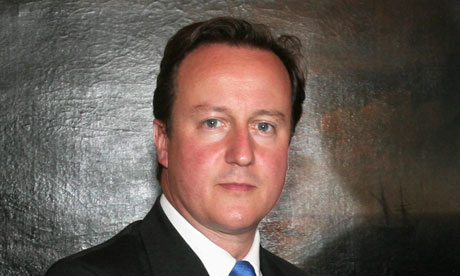
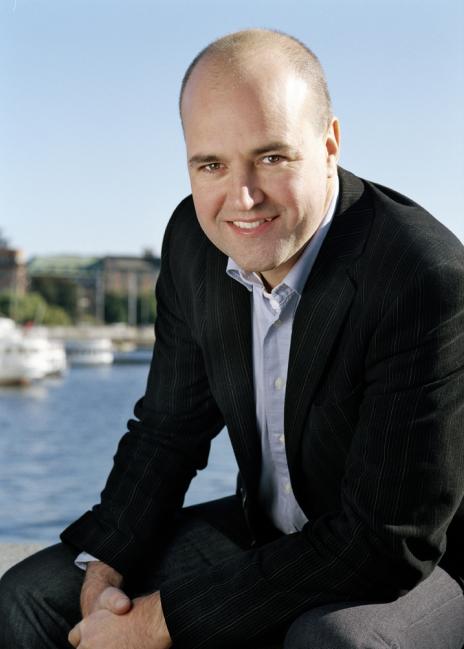
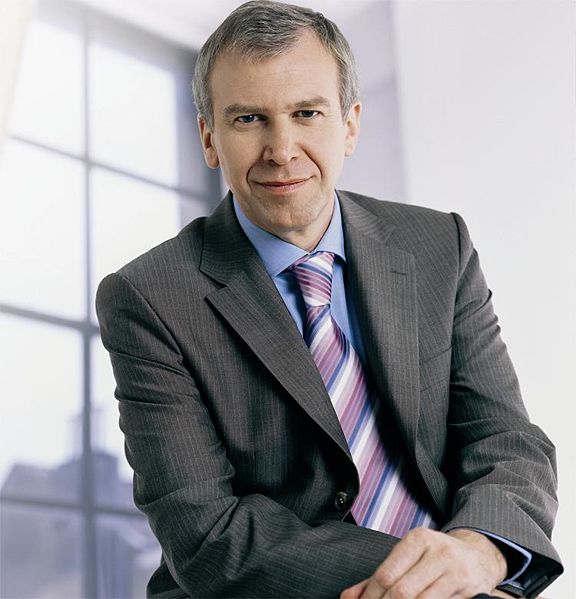
A little more than a year later, the new and bright faced Conservative Party Prime Minister, David Cameron, given the chance to revert the damage done, instead chose to stall his action, upholding the unimportant decision against Savage. Cameron, who has run from his election to the opposition leadership in December 2005 as a progressive liberal conservative, seems wrapped up in satisfying his extended political career as a caretaker leader in Westminster, and not risking his tenure with difficult choices as an executive. Much of the world has held high hopes for the new British head of state, yet Cameron's unwillingness to take up the helm of Churchill, Thatcher, and Blair is costing the country dearly. No matter his Conservative membership, Cameron has an intense desire to be a typical European everyman premier, attune to Yves Leterme of Belgium and Frederik Reinfeldt of Sweden. In these systems, the prime minister can change economic policies, yet social or legal elements remain largely untouched as the nation is preconditioned to stay fixed in government equilibriums for these issues near indefinitely.
Whether Blair, Brown, and Cameron realize or not, their governments are helping extremist Islam to gain more influence and control within Great Britain. Placing someone who disagrees with the religion on a list alongside murderers and Nazis is not prudent; it simply hands another victory to the adrenaline pumped hopes of the most disagreeable. Unless radical constitutional and legal reforms, couples with a new system of government are firmly adopted, the once great empire will be lost to a one time vote for the application of Sharia Law across the United Kingdom. The means for such a horrific bill are present, only requiring elected leaders to turn a blind eye to allow it through.
Michael Veramendi
National Alliance Vice President for Foreign Issues
With all the tumultuous happenings of the 2010 election, it can often become difficult to decipher which candidates are after serving their constituents, and those who see a high salary and governmental power as more important. As an organization which advocates a new standard of rule in Washington, as well as the return of power to the masses, the National Alliance Party is not quick to simply go about handing down endorsements to partisan hopefuls in the forthcoming races without good reason or understanding of their views and plans to shape a stronger future for the United States of America.
All told, the National Alliance Party is choosing to step forward and support a fantastic candidate in the figure of Jaime Herrera, who has launched a vigorous effort to represent the people of Washington State as the 3rd district representative to the People's House in our nation's capital. Despite facing a formidable foe in Democratic state representative Dennny Heck, Jaime has stuck to a positive message of job creation and work to help bolster small business across the 3rd district and the country.
After a life long commitment to public service, Herrera has become a staunch advocate for governmental reform, with a comprehensive plan to enforce regulations and penalties against lawmakers and other Washington insiders who breach public trust during their careers. Her plan will not only help people to gain more trust and faith in government, but also set a high bar for the performance and service of congresspeople, ensuring that their hearts are set on being true stewards of the public's faith and voting ballots.
Beyond this, Jaime gives inspiration to women across America to stand up for positive, small government values, and avoid being sidelined in the political process. Electing her to the house will set a new modus operandi for elections and the process of Washington, refusing to permit the elite circles of power from festering and solidifying their control over whom is allowed entrance to lawmaking procedures and structures.
Washington desperately needs a new wave of leadership to cleanse its halls of the marred corruption which has permeated since January 2007, and Jaime Herrera is the ideal person to lead that very charge for the rights and sake of the American people.
I wanted to begin the log by mentioning an article which has been centerpiece on the Politico website for much of the past week now. Writer Ben Smith, who is an admirable and objective author, poignantly explains how the Obama Administration has been pushing for peace agreements between Benjamin Netanyahu and Mahmoud Abbas for the Palestine Territory. The full piece can be read here: Decoding the Mideast Peace Rhetoric
Smith reveals an important point about the strong arming of Israel's leader by the Whitehouse in an effort to forge both sides into long lasting and photogenic peace. It's justified to emphasize the word "photogenic," because it is not the first time an American administration has attempted this, a more pointedly, it is yet another example of a Democrat held executive branch doing so.
President James Carter was a good example, with his movement to give Iran freedom from the royalist Shah in 1979, even when the result was doomed to bring about a crisis in the realm of a semi-intifada, which it did. To the president however, supporting stable government was not important, least not as much as gaining approval from the technocratic pen of the United Nations.
Almost two decades later, President Clinton chose to pursue similar action, this time in helping to bring about the dramatic Oslo Accords, another pact shuddering with evidence of impending collapse. To the surprise of few, the Palestinians, led by Yasser Arafat, essentially flashed a vulgar sign at Israel and the United States, refusing to end their conflict to divide and claim the land of the Israeli People.
Today, with the government's incessant concentration on some sort of flashy and trumped up world harmony plan for Israel and the Muslim world, the problem has only grown. Somewhere within the deepest channels of the president's mind, there is an honest desire for peace, albeit a clouded one.
With the increasingly dishonest responses of the Palestinian government, the United States' diplomats cannot continue to play fierce moderator with only the interests of Palestine in their thoughts. Israel is the only state within the Middle East which presently is able to successfully endure as a democracy, as well as our foremost ally, a gift none in Washington should willingly squander away. We have the opportunity to stand by Israel and allow the area to remain more secure, or throw away an ally as Carter did with the Shah for mere idealist purposes. Our duty is to protect the interests of our nation, and Israel's existence is part of those interests. As long as it remains a harbinger of democracy, we must defend and supplant its own efforts to combat terror and preserve freedom in the Middle East.
To call 2009 and 2010 a bland year of elections would require almost a zero capacity of understanding of recent events, and the shifting of alignments for political purposes. From the party switching, to the independent runs, it almost seems as if the two party mold will finally be dented--albeit in the wrong manner. And to find a prime example of this, it is necessary to look at the self preserving election choice of Governor Charlie Crist of Florida.
There is little surprise to be found in Crist's decision,which reflects upon the less than stellar career he has experienced in the public eye. Following a stint in the state senate, the the future governor was crushed in a statewide race for the Federal Branch, losing by 26% to popular incumbent Democrat Bob Graham. Discouraged but unfaltering, Crist ran for the newly created education commissioner spot, staying only long enough to raise his profile to win the Attorney General's race on a strong state ticket in 2002.
Still not a senator but not willing to let his momentum end, he gallivanted towards the governor's mansion, riding a wave of GOP popularity provided by well accomplished Governor Jeb Bush, first elected in 1998. Using several high profile figures including Arizona Senator John McCain as support, Crist took the executive seat with a decent margin, and settled in patient expectation of what was to come.
Following a near hit at the vice presidential nomination in 2008, when he quickly married in anticipation of the occurrence, Crist began to slowly reveal that his poster boy conservatism was no longer needed, and should be left behind in the age of Barack Obama's Administration. From the stimulus to wavering on healthcare, Crist has turned on most every conservative issue to help him win independents and moderates for his bag.
And finally, as Mel Martinez announced his retirement, it became the Governor's hour. No longer interested in reelection, Charlie Crist chose to have yet another go at the Senate, this time as the favorite for victory. For a while, it seemed as if it would carry him, but then, something maddening happened. Courageously fighting as an underdog candidate, State House Speaker Marco Rubio began catching up, Crist's lead dwindling to a meager five point advantage heading towards the April 2010 filing deadline.
Crist panicked, frightened by the prospect of losing the prize for which he so long salivated about, and to a man no older than 40 no less. Now trailing by the same numbers by which he once lead Rubio, Crist jumped ship to save his imperiled career: running instead as an independent.
The truth is, there is no passion or meaning in Crist's independent run. No great movement for third way representation, nor an organized effort to change government. A disgruntled loser, unwilling to face defeat, vying for a way to revitalize his shallow legacy.
Of course, there is no conservative ideology left behind here. Crist's recent actions have made him "Gulf Cop," the man who can save Florida from the government, as well as British Petroleum. Now he is the teacher's union advocate, and not the budget trimming hawk he was only 24 months ago. He is now Charlie Crist 2.0, back for moderate vengeance against the people who chose to put him second in 1998, and in the GOP primary of 2010.
Regrettably, Crist joins a decent number of politicians doing the same in their own interests instead of that of the people. He leads in the race by drawing support from both sides, even while he once decried many of the citizens who are placing their trust in him. If we are to have open and free government, then officials like Governor Crist must be bounced out and sent packing; reducing the toxicity and speed with which their actions spread in our nation's capital.
In the information age, it is sometimes easy to forget how slowly the early scientists climbed from near irrelevance to inventing the computerized wonders that now bolster our way of life in the modern day. But the innovators of yesteryear did not find their work coming to fruition simply because they were interested in it, but also because they spent the many hours testing and retrying options before finally hitting the proper result which they were pursuing. To create more employment and build better infrastructure for the 21st Century, the Federal Government must do the exact same thing to America.
Despite our seemingly unparalleled connections of wireless and internet access, countless Americans still remain cut off from cheap sources of web entrance and digital connectivity. Because of the innumerable inventions that have come from the general population experimenting with their work, the government must act to preserve true creativity and the wondrous technologies which we posses in the present day.
Thus the National Alliance Party is proposing a $500 million investment by the current elected officials into the construction of high speed cable and fiber optic lines in economically depressed areas of our nation to speed job growth and technological advancements for the next two decades.
Unless we can get a hold on the separation; the haves and the have nones of this generation, then we risk leaving behind life changing wonders in development and unimaginable possibilities for further product creation. No longer is it prudent to sit back and wait--while other countires surge ahead in the race for ideal and affordable convenience in the digital world. The time is now; our hour, and our mission for the good of the future.