There has been an arguable amount of discussion of the merits of environmental activism over the past few years, yet the debate seems to often obscure the necessary facts of the equation. No matter where a voter stands ideologically, they should possess at least a base respect for the world in which they live, and an ethic to work in the best interests of the planet's health. As members of the National Alliance Foundation, we firmly adhere to the belief that the earth, precious and self-sufficient as it may be now, will not always remain so, and thus needs to be treasured and protected.
If the preceding seemed like a confession of tree-hugging, as environmentalism is too often maligned, then let the light be shown more brightly into the problem. While perhaps Go Green movement is populated by a number of less-than-sincere individuals simply enjoying the prospect of activism, at its core are a group of concerned citizens who desire fundamental and stable reform in the view of the government in relation to environmental policy.
Bashing the corporations however, is not the best route to take. Such an option might endure for a brief spell, but eventually the backlash only turns people against the idea of properly stewarding their own piece of the earth, something to be avoided at all costs. A real solution is to start teaching environmental mentality in the school systems, and embracing it across the governmental plain. Not in any way should the move be partisan or along the lines of former Vice President Al Gore's fraudulent research, but some basic caps might not be seen as extreme.
Through the implementation of a long-term security capping, Congress would allow companies the freedom to produce excessively, building inventory, and then enter into a slower spell of less production, during which those additional items might be sold instead. For making such a sacrifice, the government would deliver tax cuts to the corporations involved, thus benefiting both sides of the transaction fairly.
On the other side, attempting to ram a massive federal regulations package down the throats of the companies is only asking for trouble, as the voters will likely side with the companies, quickly landsliding the bill's proponents at the next election.
Climate change is not without its skeptics; indeed, plenty exist who deny its viability as an issue, yet the most simple facts must be kept in mind. If carbon continues to vanish from the atmosphere, our planet could very well face a crisis of resources and secure water levels. So there is nothing shameful about showing a little heart, regardless if it makes one look a slight shade of green. Unlike most policies, environmental decisions lead to conditions which are impossible to repeal through legislation. Therefore America must decide whether it will make those conditions good--or disastrous.
Alicia Tapely
National Alliance Vice President for Environmental Affairs
Showing posts with label economy. Show all posts
Tuesday, November 23, 2010
2012: Avoiding a Third Party
In spite of the defeats of nearly 61 incumbent Democrats only weeks ago, Axelrod, Plouffe, and Obama are all salivating at their prospects for 2012, and with good reason. This year's election campaign may have been a hit for the presidency, but it showed true the ability of the third party advocates to make--or break, candidates. In California, Chelene Nightingale cost Meg Whitman considerable support, and Libertarians across the map drew enough votes to successfully, albeit narrowly, reelect many vulnerable Democrats. Our democracy fully supports active participation, but in the best interests of the people, both the Libertarians and Constitutional members will abstain from big shot campaigning in 2012, which has the pretentiousness to turn into a close race.
There is no doubt that Barack Obama has been slapped across the face; but sometimes the undecided maiden can be wooed to the injured one's side. As long as the Whitehouse can spin a convincing message that the president is being bullied by John Boehner and the Tea Party, his reelection prospects will still remain in healthy territory. So little as a bump in the economic levels could be equally endearing, and the raucous yammering of the Right about taxes is unlikely to carry through unless it can be solidified into firm pro-business message. Congress may have been won through the tactic, but no Republican, one-on-one with the president can simply hope to win by that singular view, so precautions need to be adapted.
As if the color isn't more visible, this means blocking all those who might attempt to launch a third-party run; figures including Mike Bloomberg, Ron Paul, Jesse Ventura, or even the mentally undecided Alex Jones. Bloomberg is the largest danger because he holds a unique position of visibility, decent fiscal stewardship credentials, and a boatload of money to run with. He may also draw enough independents away from both parties to let the larger Democratic base win the night.
Paul, who is still basking in his son's recent glory in the state of Kentucky, has the potential to stand up and deliver the GOP defeat which all the Washington crowd desires. His rhetoric, often suspicious and borderline anti-Semetic, could splinter the party--at least in the media's view, and bring about a crippling downturn of hopes against the president. He leads a joint coalition with Jesse Ventura, whose 9/11 inside job claims might attract enough fringe support to hurt the GOP. More importantly, his celebrity status will attract more backing, taking votes away from Obama's strongest opponent.
Jones...well, suffice to say we do not need more intellectually robbed individuals seeking the presidential office.
Like it or not, the Tea Party has to face the facts: Barack Obama will be re-inaugurated on January 20th, 2013 if its members continue to request ideological purity. Whoever holds the GOP banner in 2012 must be capable of appealing to the entire nation, not one small pocket of beliefs. And while conservatives outnumber liberals by a long shot, the extent which some of these candidates force their views are enough to push even the most disgruntled independents and moderates back to voting for our current commander in chief.
Andrew Rimmer
National Alliance Vice President for Communications
Sunday, November 21, 2010
End the Seizure of Profits
We like to discuss America as our "land of opportunity," yet far too often that title is stripped away by the juggernaut-like force of the federal government through its means of extorting money from the people. Across the board, people are taxed unfairly, businesses jarred into closure status, and the hope of success is annihilated. Disregarding all these things, the government steps in further to regulate the one independent means of personal success: the stock market. Investors who work hard studying the markets, making the calculations, and placing their money on the line are taxed voluminously for their returns--if any.
Over the years, capital gains taxes have grown to be a significant issue, but the government still seems to relish their net result of each investor's efforts, with tax rates now preparing to soar to a whopping 20% in January. Let's go ahead and examine that prospect for a second: if an investor rakes in a 200% gain, highly likely with the present downturn's eventual recovery, the government moves in. Supposing the stock moves from $3.00 to $9.00 and the investor holds forty shares, his total gain should, honestly speaking, be six on each, and thus $240. But with the government's encroachment, the man who risked his time and money, studying the market before making a final decision, will only receive $192 for his efforts--hardly fair compensation.
Therefore the government should move to cut such outrageous applications of penalties for average people who have found success in the United States in order to foster a view held by the country's founder's and in line with equalized capitalism.
Two arguments tend to prevail during the capital gains tax debate. The first, promoted by those who decry capitalism or have experienced its failures, insists that is is unfair for some to take in such money since not everyone is capable of doing so, and that only the elite dominate the trading market. While the latter may be true, the definition of "elite" should first be considered. Is an American who puts their time and efforts into research and study of the markets truly an elitist, or simply a common person looking for success? Besides the requirement of starting funds, their are hardly any barriers to joining the investment bandwagon, and countless individuals have become successful starting independent of a major firm or company.
Basing their views off of the poor economic state of the present, the other side complains that eliminating the taxes now will only serve to damage the economic situation which we as a nation are in by depriving the government of additional tax revenue. This logic might hold clear, yet one asks why presidents during strong economic times still manage to avoid doing away with the unnecessary rates of taxation. The answer is simple and mind-raking: they do not have to. Surges of cash with the millions of dollars made each day in the markets are enough to make politicians drool with excitement, as such revenue funds their massive projects of wasteful spending on a regular schedule.
If America is to remain a land where opportunity may be found, than its systems of taxation should reflect this. A nation were one's success is regulated is a country where freedom is ever close to extinction.
John Lai
National Alliance Treasurer and Comptroller General
Friday, November 5, 2010
A Wiser Republic
The great philosopher Plato always spoke of the dangers of democracy, as he realized the unhealthy tendency for voters to choose as they so believe, regardless of hard facts or common sense. In an olden analogy, he uses the example of a ship floundering in the bowels of a tempest, led by a weak captain who represents the majority, and a crew of sailors, who show themselves to be as politicians, anxious to dismantle and then seize control. And even as this remains intensely applicable in the modern day, many seem to defend democracy as the only way, disregarding what could be a singular yet decisive change for the best in its clockwork: a prerequisite test for each registered voter.
Of course this move brings immediate scorn and hate from members of the more socially liberal, who feel it would be disadvantageous to their average supporters, however a quick analysis of this past election campaign can prove otherwise, in states both in the east and west coast.
To be clear, the following assessments of the Maryland, Oregon, and Washington races are not meant to be overtly partisan; on the contrary, they can be applied in 2008 to the Senate Race in Georgia, in which voters failed to elect a good man over a sleazy Republican insider. Depending on the circumstance, the disease of voter ignorance can permeate across both red and blue states, though for practical purposes it focuses on the blue in this election.
When Bob Ehrlich announced his bid for reelection in early 2006, he should have cruised to victory, even as a conservative in the Democratic haven of Maryland. Instead, voters moved to elect Martin O'Malley due to his party affiliation, letting Ehrlich leave office with immense budget successes despite his earning of a second term. But in 2010, as the former governor launched a comeback bid, Maryland voters, clinging desperately to their Democratic leanings, would not reelect him, regardless of O'Malleys blatant failures to keep the state;s fiscal house in order. All because of Baltimore, a haven for welfare recipients and the average ignoramus when it comes to politics, the entire state was forced to loose a hope for economic recovery.
Democrats have argued that background is important in any election, and so they propped up failure ex-governor John Kitzhaber to battle the imposing Chris Dudley, who was bulleted as inexperienced and unprepared to lead--notwithstanding the 28 years of Democratic rule in the state which has led to a budget shortfall and 25% of the state budget meant for public sector retirement pay. True Dudley was a novice, yet he swept the entire state, only losing because of Portland's strong Democratic lean, and equal lean away from sensibility. If thirty years cannot solve one's problems, is it not time for a change?
And to the north, Washington's vote, decided predominantly by King County, went to veteran Democratic Senator Patty Murray, ignoring her categorically corrupt associations with Wall Street lobbyists and special interests in the nation's capital. Never mind that her opponent, estate agent Dino Rossi, carried most every county of the state--it is only the population center which counts.
So are these outcomes really sensible or fair? Should each race be hinging on the largest portion of the states, which according to studies are the least educated and intellectually deficient? There's no forcible right or wrong answer, yet this should not stop the country from adopting a test for would be voters before they may pass their ballots. Nothing extreme, but a quick test on constitutional law would be enough to encourage individuals to read up on the issues before going out to vote, thus resulting in at least closer or more logical election consequences.
Melanie Bryant
National Alliance Vice President for Education
Wednesday, October 6, 2010
Equalizing Prosperity
In the United States of America, citizens are all too familiar with the two sided economic stances of the major parties, with labor unions and the public sector the favored child of the left, and corporations the darling of the right. And still, after nearly five decades of these policies, there still has yet to be a government which champions the valid proposal of a universal and flat tax, which the National Alliance Foundation firmly believes in.
Feeding the corporations might create a meager sum of jobs in the nation, but it scarcely assembles enough to add a large period of economic plenty to the national markets, thus staying the country in a limbo of inaction and uncertainty. And while jobs within the public realm seem worthwhile in the short run, they have a tendency of damaging the economy further as taxes are drawn from the people to provide for their salaries.
Possibly the most positive element to a flattened tax system would be the removal of the lower income individuals almost completely from the tax brackets in America. Because a universal rate would remove the proportional differences from the amount of tax levied on different income levels, poor and lower middle class would no longer have major stake in tax levels, adding to their overall financial security.
For larger income drawers, the system would help by leaving them with more funds to lend and invest in the markets, benefiting the middle class college graduates and small business owners who are trying to hold unto their personal share of success in the capitalist pool. In a day and age when our largest obstacle to more prosperity is the unwillingness of financial institutions and wealthy citizens to make secure loans to the younger generations, the economy needs a stimulant to help its markets rejuvenate its statistical potency.
Already in several other countries, including the power-brokering state of Russia, flat tax rates have worked tremendously, dragging the nation from a near dead zone at the start of Boris Yeltsin's presidency to yearly growth of 9.5% in 2009. With similar growth in the United States of America, businesses would begin lending and purchasing inventory much faster, pushing the markets out of the recessions abyss and into a more stable, job friendly economy.
Showing this sort of leadership might be difficult for the dusty halls of Congress, yet it is the precise remedy to our slowing national economy. No longer should the capitol act on ideology; it must move to save the futures of Americans in this generation and the next.
Andrew Rimmer
National Alliance Vice President for Communications
Wednesday, September 29, 2010
Keep the Cuts
It appears almost entirely obvious that the Obama Administration is going to urge Democrats in the House of Representatives to extend only the middle class portions of the Bush Tax Cuts, allowing those for higher earning Americans to die away in January 2011. While the National Alliance Foundation respects the desire for each president to impose their ideological beliefs on the nation, this does not justify the insensitive and reckless decision to change the tax code in th heart of a national recession.
Whether one agrees that the current system is fair or grossly not so, it is irresponsible to radically shift the structure on which our market economy is presently based. On the first tier, the move is hypocritical seeing how the president has campaigned against the tax cuts "only for the richest 2% of America." In fact, the Bush system did cut taxes on the poor and middle class, albeit not as voluminously owing to the lesser incomes of these individuals. Since then, the economy has grown considerably, only halted by poor regulations for financial institutions and of the course the two Middle eastern wars.
Perhaps more crucial however is the support which those cuts give to our economic state as a nation. Hold anti-corporate views or not, but our present globalist structure of trade is fused with powerful companies, not simply government institutions or the middle class. Cutting that line of support to the companies which supply most American jobs will not move the economy away from its recession, but simply bring it to a damage laden standstill. If one considers the tax cuts which will expire, for individuals who have income of more than $250,000 per year, they clearly do not account for most small business owners. Even a small cafe, independently owned, will bring in close to $300,000 each year, losing out on the tax benefits.
At its core, our economy is remaining structured because of the very tax cuts made in the early 2000s. Severing them as a means of growth will not help stem a movement towards exiting our receding markets; instead exacerbating the issue.
Ideology may drive politicians as they campaign for power, but responsibility must come before all else once they have ascended to it. Modifying the tax cuts is a decision which will invariably affect the lives of countless American college graduates and business owners tremendously, so it must be done in a calculated and wise manner. Maintaining the present cuts is the only way to accomplish this, and the most effective manner in which to protect our nation's economy.
John Lai
National Alliance Treasurer and Comptroller General
Friday, September 10, 2010
Economic Mayhem: Part II
In recent hours, the Obama Administration announced its plans for a new fiscal blitz against the wavering economy with a carefully labeled "economic plan." Quick to respond after reporters attempted to place the new attempt into the same category as the Administration's earlier stimulus package, the President furiously insisted on giving it the precautionary tag of the aforementioned plan, hoping to avoid a parallel comparison with his all but universally loathed "cures" for our nation's monetary and fiscal problems.
Whether Barack Obama employs more rhetoric or even none at really is irrelevant at the point in history, and will not truly help us save us from the pitfall of an extended or double dipped recession within our economy. It is not that any members of the current majority government honestly feel or can prove the future benefits of the first and now proposed second stimulus; rather, they know the prior attempt was all a worthless facade, and the second will mirror its same classifications.
No, the Administration and the Congress is tying everything to the hated word of Capitol Hill, the binding fragment that should not inhabit the minds of our leaders as they make decisions,l yet is all too present in our present state of governance: political ideology. Even in its most mild form, the sensation has so passionately seized hold of the Democratic Party and the President that it now threatens to become the key ticket to both of their downfalls in this fresh decade.
What must be understood in explaining this is that the top dogs of the Democratic Leadership, most notably Nancy Pelosi and Charles Schumer, ran in 2006 and 2008 not with a European-style social democratic platform, but with a more moderate, fix Washington strategy. Americans were less appreciative of the Democrats than simply angry at the Republicans, and without too much difficulty, the center-leftist party coasted to an admirable victory, capturing both houses and inflicting several humiliating defeats on the incumbent Republicans. Two years later in 2008, the Democrats tried to play the same card, interrupted only by the presence of a somewhat annoying presidential candidate who was convinced that mass appeal was his ticket to the Whitehouse. He went from closing Guantanamo Bay, to fixing the economy, to trying terrorists in America, with a touch of everything to please the unsatisfiable populace, and came out on top.
Now President Obama and his party's leaders are struggling to cover for the unrealistic policies which he foolishly proposed in order to win the 2008 election. After all the fundraising and claims of future prosperity, his government is boiling down to an atrocious mix of braggart ways and projected, not sincere, leadership.
With his latest gambit being a second stimulus package, even the President knows his plans will not work, but he is fixated about the historical view of his ideology. Did he stick his guns as a social democrat, or dispel Keynesian philosophy for fundamentalist common sense? Truth unveiled, Barack Obama cannot stand the notion of his ideology being publicly versed as ineffective a wrong. His type of persona will always object, arguing long after his presidency that "too much obstructionism was involved," and that "the time was not right" for his plans to reach positive fruition.
Despite the endless sentences of jargon we will be forced to endure both in defense of this new package and afterwards, good men must push on for beneficial additions to help the economy. As the National Alliance Foundation has made clear, the key to recovery is not in more government, or in breaks only for corporations, but in the restarting of the small business community to provide jobs and opportunity to the commonwealth. Entrepreneurs, armed with a restructured policy that aims to eliminate business income tax and hands out credits for companies who invest in domestically produced products will boost our state of fiscal stability to a healthy zone of general success in the near future.
If President Obama desires to mend his image with the voters, then he must shift his range of vision to focus on helping businesses survive, not in paying off union members with large checks from the taxpayer's pocket. In fact, it would be far wiser to simply give the money to businesses through loans and to state and local governments. Federal programs are known for their ineptitude and poor results, verse the wiser actions of councilors and delegates closer to the public.
Our recovery from this recession will not come from the government; it shall be made up of the efforts and bravery of the small business community, which is the heart and soul of the American People.
John Lai
National Alliance Treasurer and Comptroller General
Saturday, September 4, 2010
Reasonable Appreciation
I think it's best to begin this piece by making a rather obvious distinction: the National Alliance Party shares close to zero sympathies to the political positions of activist and former Green Party presidential nominee Ralph Nader. When one examines even the general viewpoints of Mr. Nader, they are clearly way out of line with both the American way of life, and the concerns of most of the mainstream population. But while that may be true, I feel inclined as a member of this organization to reach out and show him the respect garnered by even the wisest who promote values similar to those of our viewpoint.
Despite being considered irrelevant by both parties at the onset of the 2000 Presidential election, Nader ascended to a position of the so called "spoiler," after his campaign for chief executive gathered an impressive 2.74% of the popular votes. Since the man's campaign received such a large number of its ballots from the State of Florida, Democratic strategists have since contended that his presence on the voting papers cost Vice President Al Gore the general election.
I feel this is unfair on many accounts, and simply surmises to a juvenile sore loser attitude from the DNC, which could not even take the presidency from George W. Bush in 2004, despite their tremendous advantage, and Nader's far lesser portion of the votes. These can briefly be covered by including Gore's weak campaign, the presidential debates commission, and Nader's own message for the year 2000.
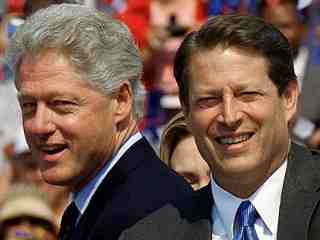
Perhaps in an admirable attempt to avoid the "no clear definition" characteristic given to former President George H.W. Bush after the Republican's copying of Ronald Reagan's image to win in 1988, Al Gore distanced himself, rather disastrously, from Bill Clinton's administration of America. Considering the Arkansas Democrat's tendency to present a record of messy and unsettling personal relationships, as well as the South's aversion to such public behavior, this might actually be viewed as wise, accept for the fact that the Vice President's alternative was nothing short of weak and ineffective.
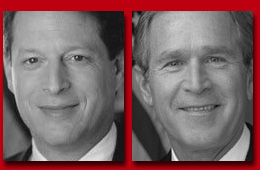
And so Al Gore became the paladin for environmental protection in the United States, leaving behind the strongest issue for his candidacy in that year: the 3 trillion dollar surplus left by Bill Clinton. The merits of the money reserves can be debated, but no matter what is said, it made a terrific ploy for a strong and difficult to beat campaign. Instead, Donna Brazile, Gore's manager, allowed him to pursue a reckless and shoddy plan which was doomed to fail against the charismatic pro-tax cuts Texas governor, George W. Bush. Fused together, the following ad reveals just how out of touch Gore's message felt to a public in which less than 10% today feel protecting the planet is an important issue (Gallup Poll).
As the election came around to presidential debates, little action was taken by the Democratic Party to help include Mr. Nader, despite his insurgent strength in choice polls and in battleground states. Not surprisingly, the commission for debates, controlled by both former party chairs of the two major electoral factions and a large number of corporations, refused to allow Ralph Nader to attend any of their three sessions, and even went as far as to deny him a seat despite his registered invitation and ticket for attendance. According to commission rules, candidates must poll at least 5% in several national questionnaires before being admitted, and Nader did not qualify with enough support. In minced terms, he was not relevant to the equation--accept that he became very relevant as soon as his movement hurt the Democrats.
Ever since Al Gore conceded the race to George W. Bush, the Democratic Party has attempted to slander the man for his hopeful candidacy, absolutely avoiding how his message drew members of all parties and ideologies to cast their ballots for him in 2000. As noted before, Nader's views can seem ridiculous at some corners, yet his message for the turn of the century was to forge a strong alliance between the people and honest businesspeople in America. The Democrats failed to deliver their historical populist message, and neglected to use the strongest element of advantage: the Clinton surplus. What should have been an easy victory turned into a milestone of defeat as the party scrambled to realign, and failed again, in 2004.
Ralph Nader may never become president, nor should anyone hope he does, yet the man deserves our respect and consideration. Standing firm against two of the largest and most powerful parties in the United States is not cakewalk; it requires tenacity and an iron resilience against the opposition. For all his work, Ralph Nader has seen even his closest friends betray him for the Democratic Party, yet a stronger force is allied with him: countless Americans who desire fundamental change in the system of government.
David Marino
National Alliance Vice President for Campaigns
Subscribe to:
Posts (Atom)